

Introduction: Compassionate, Evidence-Based Support for Your Child’s Growth
Have you ever wondered what your child is trying to communicate through behaviors, frustration, or difficulty expressing needs?
Children may have communication, social interaction or daily living difficulties and families can benefit from compassionate and evidence-based support.
Applied Behavior Analysis (ABA) therapy is a highly studied method to assist children in learning positive skills. According to the Behavior Analyst Certification Board (BACB), there were more than 246,000 Registered Behavior Technicians (RBTs) certified worldwide at the end of 2025, reflecting the growing demand for ABA services and behavioral support.
At Alma Behavioral Solutions, we provide individualized ABA therapy designed around each child’s strengths, needs, and goals. We work with parents and children to enhance communication, social skills, independence and daily functioning, and to provide parents with practical advice to promote their children’s progress at home, school and in the community.
Key Takeaways
- Behavioral services work to build effective skills for children that will enhance their life day-to-day at home, school and in the community.
- Family involvement plays a critical role in helping children generalize and maintain new skills.
- ABA therapy teams often include BCBAs, Behavioral Technicians, behavior technicians, and Registered Behavior Technicians (RBTs).
- Understanding RBT certification, registered behavior technician certification, and the RBT exam can help families better understand the qualifications of direct-care providers.
What Are Behavioral Services for Children and Families?
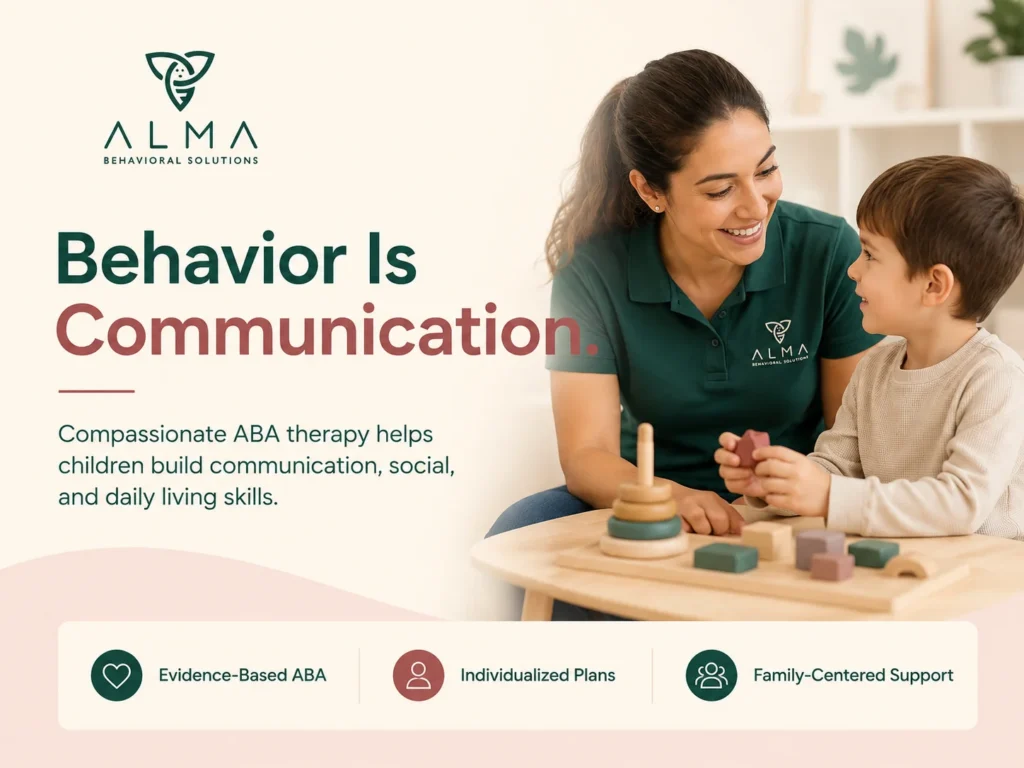
Behavioral services supports children in developing important daily, emotional, independent, social and communication skills. Through ABA therapy, behavior is viewed as communication, allowing professionals to identify why behaviors occur and teach effective, functional alternatives.
Children may use behaviours to communicate their needs, as a way of avoiding a challenge, to get to a desired item or to react to the environment. Knowing these patterns, behavioral experts can come up with individualized strategies to support positive behavior and future success.
Behavioral services support children to improve their communication, routines, social skills, transition and day to day independence so they can thrive at home, school and in the community.
How Behavioral Services Support Learning and Development
Behavioral services involve evidence-based teaching strategies to teach new skills to children in a structured and systematic way and provide them with positive reinforcement.
Some areas of focus are:
- Communication skills
- Social skills
- Daily living skills
- School readiness
- Emotional regulation
- Attention and focus
- Independence and self-care skills
Programs are individualized to meet each child’s unique needs, strengths, and developmental goals.
Why ABA Therapy Is Often Used in Behavioral Care
Applied Behavior Analysis (ABA) is an evidence-based approach that focuses on understanding behavior and teaching meaningful skills.
ABA therapy helps professionals:
- Identify factors that influence behavior
- Develop effective teaching strategies
- Track progress using data collection
- Build communication, social, behavioral, and daily living skills
Treatment plans are personalized and will facilitate meaningful progress in home, school, and community environments.
Why Families May Seek Behavioral Support Services for Children
Families want behavioral services to help them communicate, have routines, develop social skills, and manage challenging behaviors that impact their success at home, school and in the community. Behavioral support and ABA therapy are evidence-based program strategies that allow for children to develop independence and make meaningful progress.
Communication and Social Skill Challenges
Many children have problems communicating, interacting socially, or expressing their needs. These issues may impact on the relationships, schooling and routine.
ABA therapy helps children build essential skills such as:
- Functional communication
- Social interaction and peer engagement
- Turn-taking and cooperative play
- Conversation and listening skills
- Emotional expression and self-advocacy
Learning to communicate and socialize better can help to minimize frustration, build confidence and enhance success at home, school and in the community.
Daily Living Skills and Routine Independence
Behavioral services teach children daily living skills, independence and confidence in their daily activities. ABA therapy can assist with activities like dressing, homework, instructions and transitions between activities.
Key areas of support include:
- Self-care and hygiene skills
- Daily routines and task completion
- Following directions and instructions
- Visual schedules and routine supports
- Transition and coping skills
- Independence at home and school
These are skills that enable children to be more independent and less frustrated, and to have the skills to succeed in life.
Challenging Behaviors That Affect Home, School, and Community Life
Challenging behaviors may be a means of expressing a need – for attention, to avoid a task, or in response to sensory or emotional stress, among others. These behaviours can involve tantrums, aggression, noncompliance or self-injury.
ABA therapies involve assessment and evidence-based approaches to uncovering the meaning of behaviors and learning alternative skills. Support may include:
- Functional behavior assessment (FBA)
- Teaching replacement and coping skills
- Positive reinforcement
- Regular and routine changes to the setting
- Parent training and school collaboration
Behavioral services serve to develop children’s communication, emotional regulation and daily living skills at home, school and in the community as it addresses the cause of the behavior.
Alma Behavioral Solutions’ Family-Centered ABA Approach
We use evidence-based behavioral strategies combined with continuous collaboration with the family that create meaningful skills to enhance daily living.
Individualized ABA Therapy Plans
Each child is provided with an individual treatment plan, after an extensive evaluation. Goals are based on the child’s developmental needs and can be related to communication, social interaction, independence, emotional regulation, behaviour support and undertaking of daily routines.
BCBA-Led Assessment and Clinical Oversight
All of the services are provided by a Board Certified Behavior Analyst (BCBA), who is tasked with determining the therapy goals, the need for therapy, and what progress is being made and what adjustments need to be made to assure the therapy is effective and relevant.
Parent Training and Family Support
Families are an important part in the child’s development. Parent training fosters practical solutions that can be put into place with regularity in daily routines, to support skill building, enhance communication and respond to challenging behaviours.
Ongoing Progress Monitoring
The key to effective ABA therapy is the measurable outcomes. Data is reviewed regularly, progress towards goal is assessed and adjustments in interventions, when necessary, are made. This continuous cycle ensures that therapy is related to meaningful change that can be implemented in the child’s home, school and community.
Core Behavioral Services for Children, Parents, and Families
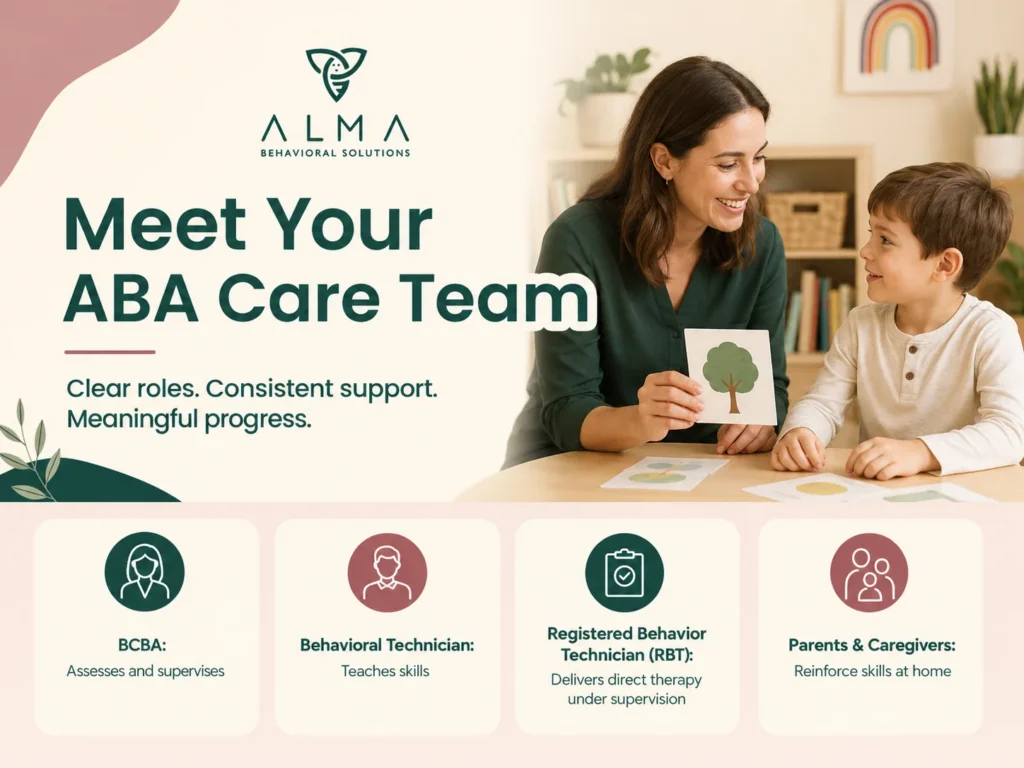
Our behavioral services support children in developing meaningful skills in home, school and community. Each program is individualized and supervised by a BCBA to support long-term growth and independence.
Direct ABA Therapy
Direct ABA therapy provides one-on-one support to help children build communication, social, daily living, and behavior skills. Individualized treatment plans use evidence-based ABA strategies and positive reinforcement to promote meaningful progress at home, school, and in the community.
In-Home ABA Therapy
In-home ABA therapy helps children learn skills in their natural environment. Services can target routine support, communication, transitions, self-help skills, and behavior supports which make it easier for children to put new skills into practice throughout the day.
Parent Training and Family Support
Parent training gives caregivers practical ABA strategies to support their child’s growth. Families are taught to reinforce positive behaviors, enhance communication, establish consistent routines, and reinforce skills outside of therapy sessions.
School Consultation and School Shadowing
Consultation with school supports goal setting with classroom expectations. Services can include teacher collaboration, classroom observations, behavior support planning, social skills support and school shadowing for increased academic and social success.
Behavioral Assessments
Behavioral assessment determines a child’s strengths, challenges, and skill needs. Assessment results guide individualized treatment plans and measurable goals, ensuring ABA therapy targets meaningful outcomes.
Social Skills Training
Social skills training aids children in developing their peer-interaction skills, conversation skills, cooperativeness, turn taking and emotional awareness. ABA-based social skills programs build confidence and support positive relationships at school, home, and in the community.
Behavior Intervention Planning
Behavior intervention planning is the use of ABA strategies to decrease challenging behaviors and to teach functional alternatives. Plans are based on the reasons behaviors occur and focus on improving communication, independence, and daily functioning.
Communication Skills Development
Communication skills development enables a child to communicate needs, directions, questions, and interactions more effectively. Verbal communication, visual or alternative communication systems can be used in an ABA program depending on the child’s needs.
Who Provides Behavioral Services? Understanding the ABA Care Team
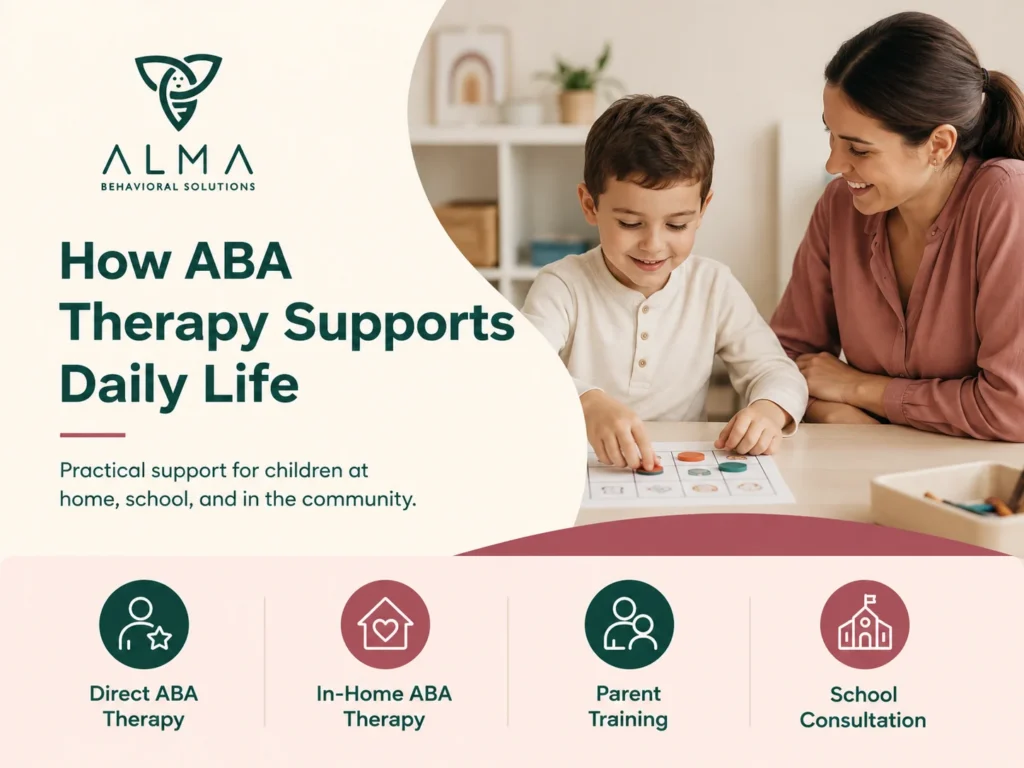
ABA therapy is provided by a team of trained professionals that collaborate to help a child communicate, socially interact, behave and live. Families can feel more confident about their child’s care in understanding each role.
BCBA (Board Certified Behavior Analyst)
A BCBA oversees the clinical side of ABA therapy. They make assessments, develop individual treatment plans, establish goals, track progress and oversee the team of therapists. The BCBA ensures services remain evidence-based, ethical, and tailored to the child’s needs.
Behavioral Technician
A Behavioral Technician works directly with children during ABA therapy sessions. They teach skills, implement behavior strategies, collect data, and help children practice goals developed by the BCBA. Their steady engagement is a pivotal factor in their progress.
If you are wondering what is a behavior technician, this role refers to a trained direct-care provider who supports children during ABA therapy sessions under clinical guidance.
Registered Behavior Technician (RBT)
A Registered Behavior Technician (RBT) is a credentialed individual that provides direct ABA therapy under a BCBA’s supervision. RBTs carry out treatment plans, teach new skills, monitor progress and assist with behavior and communication goals in various settings.
For families asking what is a registered behavior technician, an RBT is a credentialed behavior technician who has met BACB requirements and works under ongoing BCBA supervision.
Parents and Caregivers
Parents and caregivers play an important role in ABA therapy. They assist in implementing strategies in everyday activities, disseminate information to the care team and provide support to practice skills out of sessions. Parent training also enables families to behave in a consistent manner at home.
Other Support Providers, When Needed
Children may also receive services from speech-language pathologists, OTs, teachers or other specialists. These can work closely with the ABA team to assist with communication, sensory issues, school objectives, and life skills.
RBT, Behavior Technician, and BHT Roles
These titles are similar, but they are likely not synonymous with the same qualifications or responsibilities.
Behavioral Technician and Behavior Technician
Behavioral Technician and behavior technician are sometimes used interchangeably with others who work directly with the children during the ABA sessions. The training needed may differ depending on the employer, state laws and regulations, and service delivery.
Registered Behavior Technician
A Registered Behavior Technician (RBT) has completed the BACB credentialing process, including required training, a competency assessment, application approval, and the RBT exam. This credential is for individuals who have attained basic competence in providing ABA services under supervision.
Behavioral Health Technician
The Behavioral Health Technician’s role can be in mental health, residential, psychiatric or developmental support. Some duties may be similar to what performed by an ABA service, but this does not imply that these duties are performed by the RBT.
Registered Behavior Technician Certification, RBT Certification, and the RBT Exam
Understanding these credentials can provide valuable insight into the training and qualifications of direct-care providers.
What Is Registered Behavior Technician Certification?
Registered Behavior Technician certification is a basic credential for those that provide ABA services and are supervised on an on-going basis. The credential is designed to help assure uniformity in the care and support of children and families provided by direct-care providers.
What Does the RBT Exam Measure?
The RBT exam evaluates foundational knowledge related to:
- Measurement and data collection
- Skill acquisition
- Behavior reduction strategies
- Documentation
- Professional conduct
- Scope of practice
Successful completion equates with readiness to work in ABA under supervision.
Online Behavior Technician Training and RBT Certification Online
Online behaviour technician training is often selected by many future ABA professionals due to the convenience and flexibility of scheduling.
People need to check that course content of their program of interest complies with existing BACB requirements and certification standards before enrolling in an online program.
Relevant 2026 Data for Families and Job Seekers
According to the data the BACB publishes each year on its certification website, there were 246,109 active RBT certificants as of the end of 2025 and the first time pass rate for the RBT exam was 75%.
The growth of the ABA field has continued, and these statistics reflect the critical role of trained direct-care professionals in providing behavioral services to children and families.
How Behavioral Services Help Children Build Meaningful Skills
Behavioral services enable children to acquire the important life skills that are necessary for success at home, school and in the community. ABA therapy emphasizes meaningful progress by using individual teaching and practicing.
Communication Skills: Children develop functional communication skills, express their emotions, answer questions and communicate their needs. Improved communication can minimise frustration, enhance behaviour and increase a child’s independence.
Social Skills: Social skills training can include sharing, taking turns, having conversations, interacting with peers, and understanding social cues. These important ABA therapy goals help children build friendships, confidence, and stronger relationships.
Daily Living Skills: Daily living skills focus on everyday routines like getting dressed, practicing hygiene, eating meals, cleaning up, and following directions. In developing independence in these areas, long-term growth and success are established.
Emotional Regulation Skills: Practical coping, self control skills, frustration tolerance and ways to manage emotions in difficult moments at home, school and in the community are taught to children.
Play Skills: Play skills encourage children to interact with others, join group activities, use creativity and imagination, and strengthen important social skills and communication abilities through meaningful play experiences.
School Readiness Skills: Some of the school readiness skills could be paying attention, following directions, finishing work, moving from one activity to another, and being successful in classroom routines. The skills enable children to be more confident and readier to learn.Join ABA Therapy Glendale.
How Behavioral Services Support Parents and Families
Behavioral services extend beyond the child by providing guidance, education, and practical support for the entire family.
Parent Coaching That Feels Practical
Parent coaching involves practical and effective strategies that are family friendly. Families are taught practical skills that can be used at the dinner table, at homework, in transition, out in the community, and at nighttime.
Building Consistency Between Therapy and Home
When the expectations are the same in the different environments, children learn best. Collaboration with therapist and caregiver reinforces skills, helps to decrease confusion and promotes successful generalization.
Improving Communication With the Care Team
Parent communication supports them to know the goals, progress and next steps. Home visitors can share what they observe at home, ask questions and collaborate with the therapy team to adapt strategies as necessary.
Reducing Stress Around Daily Challenges
Knowing what to expect can help eliminate uncertainty and frustration. Support can give families the confidence, consistency and peace of mind to face challenges.
Supporting Long-Term Family Confidence
Behavioral services can help parents feel more prepared to support their child outside of therapy sessions. With time, families acquire new tools which can be used as they continue to grow and as their needs evolve.
What Families Can Expect When Starting Services With Alma Behavioral Solutions
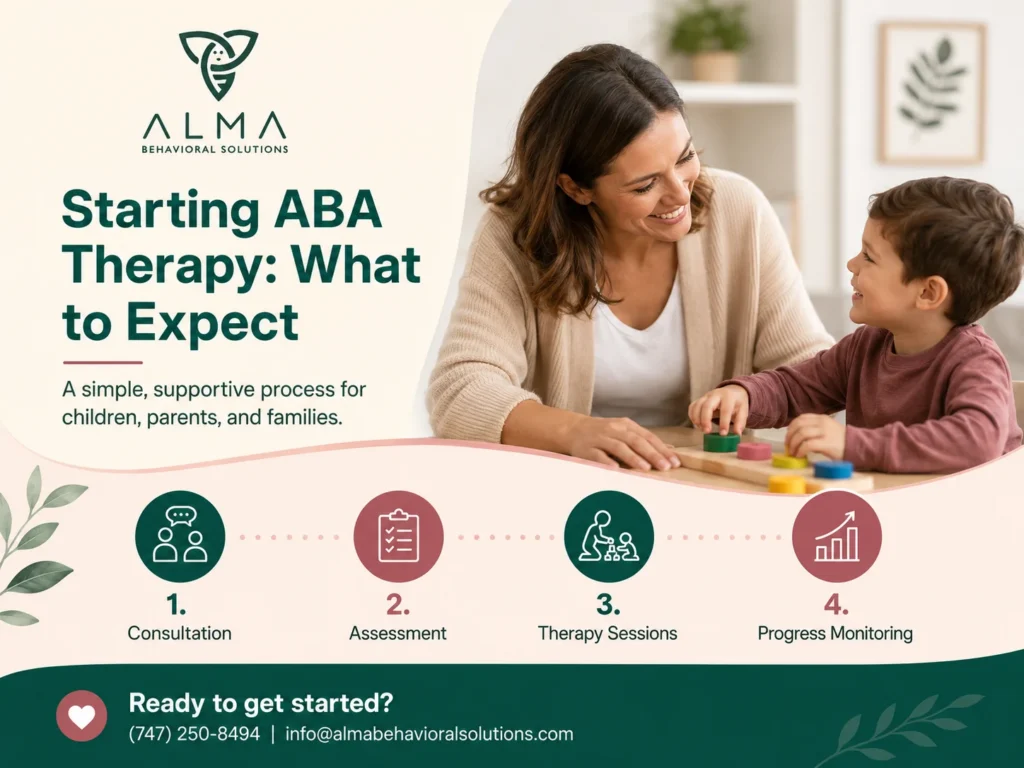
Many families wonder what to expect when starting ABA therapy. At Alma Behavioral Solutions, we focus on making the process clear, supportive, and tailored to your child’s needs.Connect free for ABA Therapy Session Pasadena.
Initial Consultation:
It starts with a discussion with you and your family about your child’s strengths, challenges and goals. This is also a good time to get questions about services, scheduling and what ABA therapy might be like for your child.
Assessment and Individualized Goal Planning:
A Board Certified Behavior Analyst (BCBA) conducts an assessment to understand your child’s skills, communication, behavior, and developmental needs.
Based on the assessment, the BCBA creates an individualized treatment plan with meaningful goals that may focus on communication, social skills, daily living skills, emotional regulation, independence, and other areas important to your family.
Therapy Sessions and Progress Monitoring
After services have started, therapy sessions enable children to learn and practice skills in structured and natural environments. Therapists use evidence-based ABA strategies and positive reinforcement to support learning.
Ongoing data collection is used to track progress, enabling the clinical team to assess progress and make adjustments as necessary.
Parent Involvement and Ongoing Support
Parent involvement is an important part of the therapy process. Guidance is provided for families on helping to develop skills, encouraging positive behaviour and consistency of routine throughout the day.
Communication with the BCBA ensures goals are relevant and aligned to your child’s progress on a regular basis.
Ongoing Review and Treatment Adjustments
Treatment plans are revised as children grow and develop new skills, and priorities change as a result. The BCBA is regularly checking progress, adjusting goals and working with families to achieve effective, sustainable, and long-term results.
We want children to develop practical skills that enhance their ability to participate, be independent and live their lives to the full in their home, school and community.
Why Choose Alma Behavioral Solutions for Behavioral Services?
At Alma Behavioral Solutions, we provide ABA therapy services that are individualized, evidence-based, and centered on the unique needs of each child and family.
Our approach includes:
- Personalized treatment plans based on assessment and ongoing progress monitoring
- Board Certified Behavior Analyst (BCBA) supervision
- Active parent and caregiver involvement throughout the therapy process
- Evidence-based ABA interventions tailored to meaningful goals
- Skill development that supports success at home, school, and in the community
Working in partnership, consistency and trust is key to our effective therapy. By working closely with families, we help children develop communication, social, behavioral, and daily living skills that can make a meaningful difference in everyday life.
Contact Alma Behavioral Solutions for ABA Therapy and Behavioral Support
If your child is experiencing challenges with communication, behavior, social skills, daily routines, or independence, Alma Behavioral Solutions offers personalized ABA therapy designed to meet your family’s unique needs.
Our highly trained staff collaborate with children and their caregivers to develop skills that are relevant to their school and community experiences, as well as their success at home.
For more information on behavioral services and to schedule a consultation, please contact us at (747) 250-8494 or info@almabehavioralsolutions.com.
Conclusion: Compassionate Care That Supports the Whole Family
Behavioral services and ABA therapy can help children develop essential communication, social, behavioral, and daily living skills that improve quality of life and increase independence.
Our approach is evidence-based, family-centered and involves making meaningful progress and achieving long-term success. By providing personalized care, involvement from parents and empathy and understanding, we teach children skills that have an impact in their daily lives.
To learn how our ABA therapy services can support your child and family, contact Alma Behavioral Solutions at (747) 250-8494 or info@almabehavioralsolutions.com.
Frequently Asked Questions
How do I become a Registered Behavior Technician in 2026?
To become a Registered Behavior Technician, candidates generally need to meet BACB eligibility requirements, complete the required 40-hour training, pass the Initial Competency Assessment, submit an application, and pass the RBT exam. RBTs must also receive ongoing supervision from a qualified supervisor.
What training is required before the RBT exam?
Before taking the RBT exam, candidates must complete a 40-hour RBT training course that follows BACB requirements. Training usually covers measurement, data collection, skill acquisition, behavior support, documentation, ethics, professional conduct, and scope of practice.
Can RBT certification be completed online?
Some parts of RBT certification can be completed online, including many 40-hour training programs. However, candidates still need to complete the competency assessment, submit a BACB application, pass the exam, and meet all current certification requirements before becoming credentialed.
What does a behavior technician do during ABA therapy?
A behavior technician works directly with clients during ABA therapy sessions. They help teach communication, social, behavioral, and daily living skills while collecting data and following a treatment plan created by a supervising clinician.
How is a behavioral health technician different from an RBT?
A behavioral health technician is a broader role that may appear in mental health, residential, psychiatric, or healthcare settings. A Registered Behavior Technician is a specific BACB Can families ask about a technician’s training?
Yes. Parents can ask about a technician’s credentials, supervision, experience, and training. These questions help families understand who is working with their child, how the care team is supervised, and how ABA therapy services are delivered.