
Introduction
What if a difficult part of your child’s day could become easier before frustration begins?
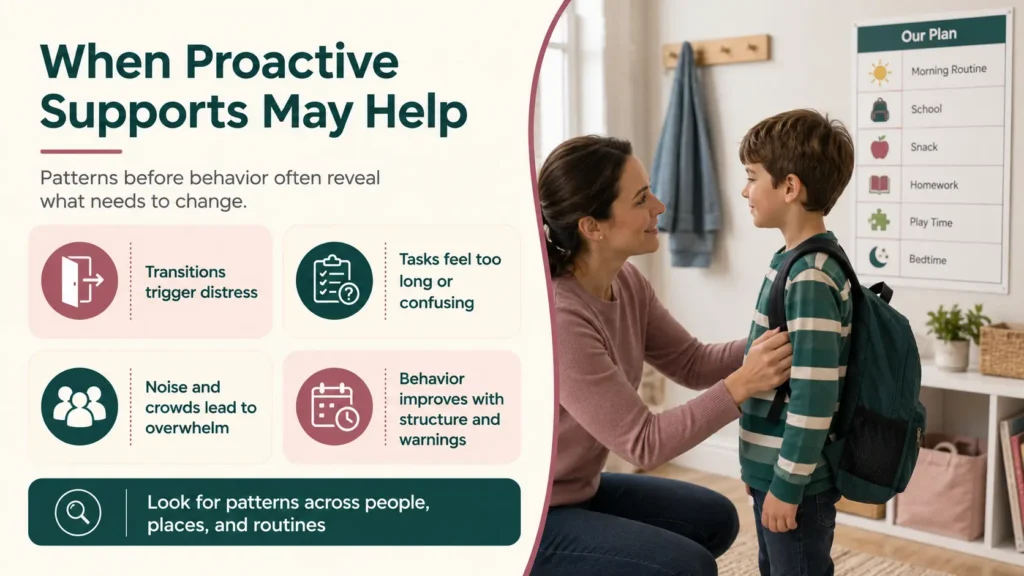
A confusing instruction, sudden transition, noisy room, or task that feels too long may reliably come before distress, avoidance, or unsafe behavior. Antecedent interventions in ABA change those circumstances that precede them, increasing the ability for communication, participation, and independence. This proactive stance is important because it helps to avoid missing out on preventable barriers if a problem does arise after it has begun.
Practical support is needed that is clear, respectful and measurable, to families. Clear prevention can make a world of difference in making daily routines feel safe for everyone involved. No single approach will be effective for all children.
This guide describes the ABC model, function-based strategies, offers practical examples, summarizes implementation, covers topics of ethics, and shows indicators when professional support is required.
Understanding Antecedent Interventions in ABA
What Are Antecedent Interventions in ABA
Antecedent interventions are strategies that alter an event, instruction, routine, environment or demand prior to the behavior. They are designed to reinforce desirable behaviours or decrease factors associated with behaviours that pose risks to safety, learning, communication, or daily functioning.
AFIRM describes the practice as arranging circumstances before an activity or demand to increase appropriate behavior and reduce interfering behavior.
An antecedent doesn’t always trigger a behavior. It could be an indicator of work, attention, break, item, or sensory input. Assessment is focused on the pattern of events and not on one event. This supports an accurate antecedent ABA definition.
How Antecedents Work in the ABC Model
The ABC model is for describing what took place before, the action taken and what came after.
| ABC component | What it means | Question to ask | Screen-time example |
| Antecedent | The event, instruction, situation, or environmental change that occurred before the behavior | What happened immediately before? | A parent tells the child that screen time is finished |
| Behavior | The specific action that can be seen or heard | What did the child do? | The child cries, drops to the floor, and reaches for the tablet |
| Consequence | The response or environmental change that followed the behavior | What happened immediately afterward? | The parent gives the child five additional minutes of screen time |
ABC data points imply patterns, but does not prove function. Interviews, observation, preferences, health issues and sometimes an FBA will also be required.
Antecedent, Consequence, and Replacement-Skill Interventions
| Intervention type | When it is used | Main purpose | Transition example |
| Antecedent intervention | Before the behavior occurs | Changes the environment, instruction, or routine to make success more likely | Give a five-minute countdown and show a first-then board before screen time ends |
| Consequence intervention | After the behavior occurs | Changes what follows the response to strengthen an appropriate behavior | Provide praise or access to a preferred activity after the child completes the transition |
| Replacement-skill intervention | Before and during relevant situations | Teaches a safer and more effective way to communicate or meet the same need | Teach the child to request more time, help, or a short break |
Functional Communication Training is mainly replacement-skill teaching because it builds communication serving the same function as the interfering behavior. Although visual cues or opportunities may be used to assist with FCT, it is not a purely antecedent intervention. AFIRM describes it as identifying function and teaching communication that meets the learner’s need.
Why Behavioral Function Matters
A strategy should be a reflection of the reason for behaviour, not its appearance. Two children can be leaving a table, one to get away from challenging tasks and the other to move or get attention. Functions include escape, attention, access to an item or activity, and automatic or sensory reinforcement. Setting events may include poor sleep, illness, hunger, noise, change in medication or change in routine.
| Possible behavioral function | What the behavior may help the child do | Antecedent support to consider | Replacement skill to teach |
| Escape or avoidance | Delay, reduce, or leave a difficult task, demand, or situation | Shorten the task, show a clear endpoint, offer help, provide choices, and schedule appropriate breaks | Request help, a break, or a task adjustment |
| Attention | Gain interaction, reassurance, or a response from another person | Provide planned attention, use a visual availability cue, and make attention predictable | Appropriately request attention or interaction |
| Access to an item or activity | Obtain a preferred toy, food, device, place, or activity | Use a visual access schedule, transition warnings, first-then support, and acceptable choices | Request the item, wait, or choose an available alternative |
| Automatic or sensory reinforcement | Gain helpful sensory input or reduce uncomfortable stimulation | Modify noise, lighting, clothing, seating, or crowding and provide safe sensory options | Request sensory support, movement, headphones, or a quieter space |
Function is a hypothesis based on evidence. An FBA can be used by a BCBA for persistent, complex or risky behavior. Other health issues, such as pain, sleep and medication should also be taken into account.
Types of Antecedent Interventions in ABA
ABA antecedent interventions can be divided into eight categories of focus: changing conditions before behavior. All types are designed to address a distinct feature of the environment, teaching or learning to promote motivation, communication and skill building.
Environmental Modifications
Environmental modifications means adapting the physical or social environment to minimize barriers and provide greater predictability. This can be done through less noise, arranging materials, providing better lighting or providing a designated calm area. The changes support the learner in having a more conducive environment and expectations for completing tasks.
Visual Supports
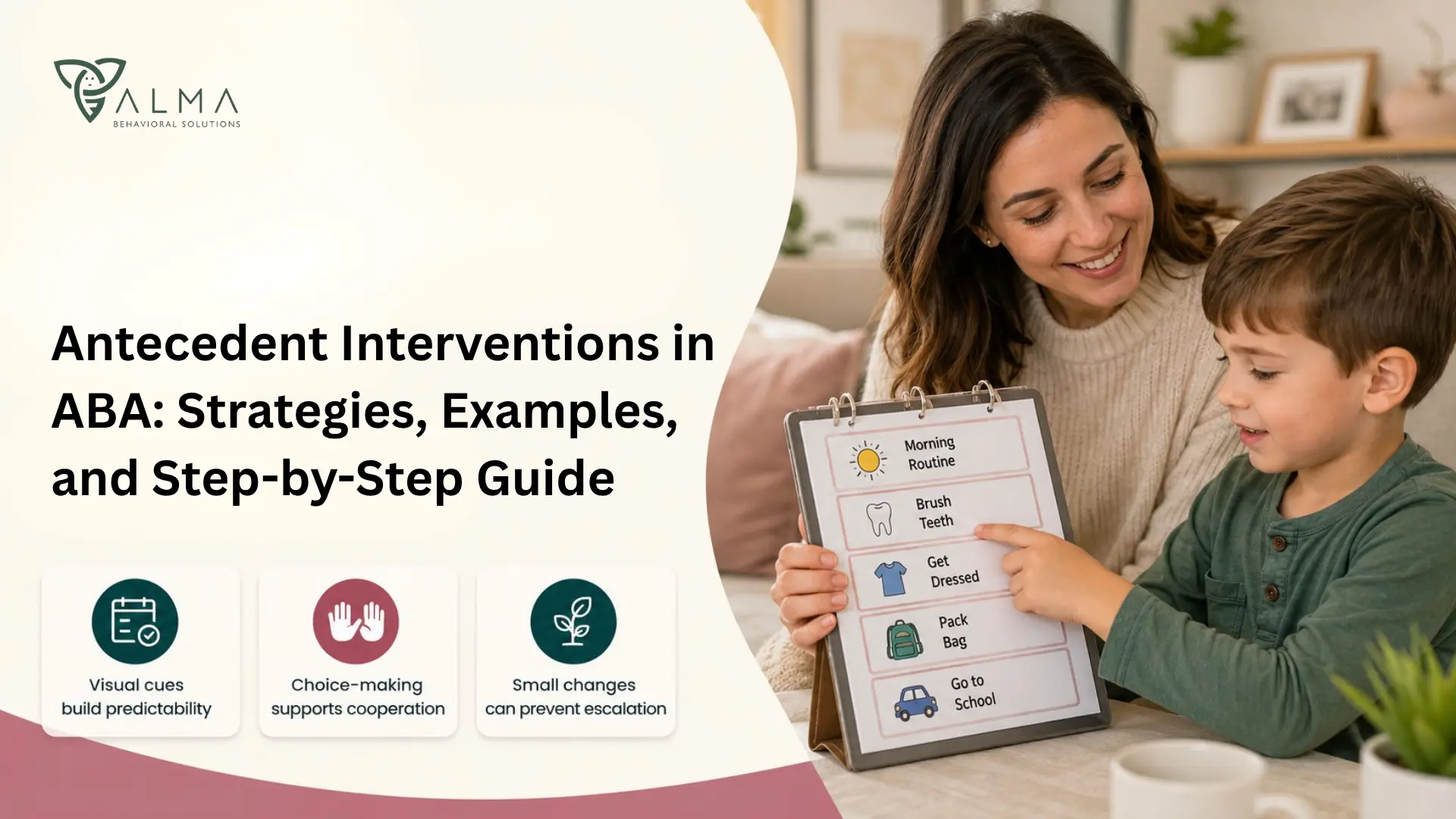
Visual sensory supports provide clear, concrete information about what is happening now and what will happen next. Visual schedules, first then boards, timers and countdowns are used to increase predictability and decrease uncertainty during transitions or routines.
Choice-Making and Shared Control
Choice Making Strategies provide the learner with appropriate control in structured activities. This can involve selecting the task order, materials, location, time or the amount of assistance. Real selections can enhance collaboration, motivation, and engagement.
Priming and Pre-Correction
Priming is looking ahead to what is to come or what is expected to happen, so that the learner is prepared to be successful. Pre-correction provides a brief reminder of expected behavior right before a situation where challenges are likely, increasing the chance of appropriate responding.
Behavioral Momentum
The idea of behavioral momentum is to have a series of simple, high probability tasks before a more challenging task is introduced. This approach will help develop engagement and cooperation because it maximizes the chances of success which can help pave the way for success with more challenging demands.
Noncontingent Reinforcement
Noncontingent reinforcement provides access to a reinforced item, activity or attention on a fixed schedule without regard to the behavior. This can increase the motivation to engage in a problem behavior because the learner receives reinforcement regularly and predictably.
Task Modification and Demand Fading
Task modification is the change of the task difficulty, length or structure to make it easier to manage. For demand fading, expectations are slowly increased across time by performance data. These strategies keep kids learning without frustration and avoidance.
Errorless Learning, Prompting, and Competing Sensory Stimuli
Errorless learning involves prompts that allow for early success and eliminate repeating of errors in the learning of a skill. Prompts are gradually reduced as independence is achieved. Competing sensory stimuli provide safe, appropriate sensory input—such as headphones, movement, or fidgets—to replace or reduce the impact of challenging sensory experiences.
Antecedent Intervention Examples Across Daily Settings
Antecedent intervention examples will be most useful if they also contain the possible function, replacement skill, and outcome measure.
| Setting and situation | Possible behavioral function | Antecedent intervention plan | Replacement skill to teach | What to measure |
| Home transition from tablet to bedtime | Delaying or avoiding the transition to bedtime | Give a countdown, use a first-then board, keep the transition cue consistent, and offer a choice of the first bedtime activity | Request more time, help, or a short break | Time needed to begin the transition, signs of distress, and independent communication |
| School avoidance of a writing task | Escaping work that feels long, difficult, or unclear | Shorten the first task segment, show a visual endpoint, offer a choice of writing materials, and mix mastered items with new work | Request help, clarification, or an appropriate break | Work completed, time engaged, level of prompting, and appropriate requests |
| Waiting in a noisy clinic or community setting | Escaping uncomfortable noise, crowding, or extended waiting | Preview the visit, reduce unnecessary waiting, provide a visual waiting cue, and offer a safe sensory support | Request movement, a quieter area, or a break | Waiting tolerance, signs of stress, use of sensory support, and independent requests |
Plans should not be copied without considering skills and function. Some learners will find a countdown helpful, others will find it worrying. Evidence demonstrates effectiveness based on data and caregiver observations. Success can be about communication, fewer distress or less visible behaviors, independence, participation.
How to Implement Antecedent Interventions Step by Step
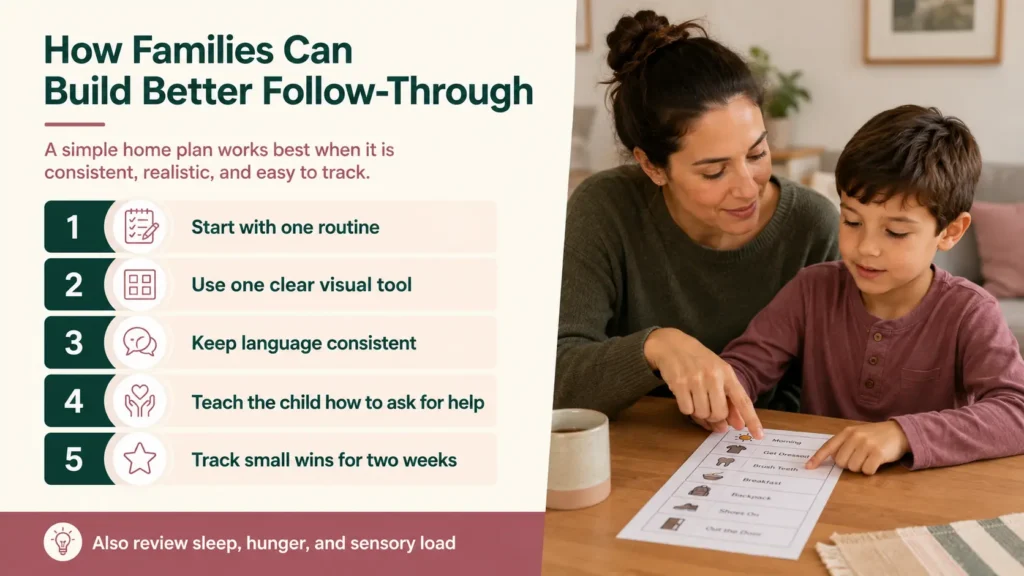
- Define target and replacement behaviors: Avoid using vague terms like “uncooperative” or “defiant” to describe students.
- Collect baseline and ABC data: Note antecedents, behaviors, consequences, frequency, duration or latency before, during and after behaviors.
- Assess patterns and function: Identify trends based on observations, caregiver interviews, preference assessments, setting events, health factors, and an FBA, where appropriate.
- Select a small set of supports: Select strategies that match the function, are feasible to implement daily, and are least intrusive strategies that meet the need.
- Write a clear intervention plan: Identify persons to carry out each step, what will be done, when it will be done, materials required, and what to do respectfully if there is a distress or refusal.
- Teach the support and replacement skill: Model and practice how to use tools such as visual schedules, timers, choice boards, or break cards, along with the communication response.
- Train all team members: Model, role play, provide feedback and create a simple fidelity checklist to ensure caregivers, teachers, and staff implement the plan consistently.
- Monitor and review progress: Compare new data with baseline data, review if plan is being adhered to, and incorporate caregiver input regarding effectiveness in real world.
- Fade and generalize supports: Provide fading or support and make sure that the skill is used in various routines, settings and people.
AFIRM implementation is a process that includes planning, use and monitoring. The 47 single and two group case studies in its updated evidence review cover ages from birth to 22 and outcomes for communication, adaptive skills, behavior, play, school readiness, mental health, academics and social development. Research has shown effectiveness, but results will always be different depending on the individual and how well the research is applied.
Benefits and Ethical Best Practices
Benefits of Antecedent Interventions in ABA
Antecedent interventions can ease the way to functioning in the daily life by making expectations more explicit and decreasing obstacles prior to behavior. Key benefits include:
- Helps learners understand what will happen next
- Increases participation in tasks and routines
- Encourages appropriate, functional communication
- Builds self-help and self-management skills
- Eases movement between activities
- Lowers emotional distress during demands or changes
- Decreases power struggles between caregivers and learners
- Supports more manageable daily routines
- Emphasises inclusion, ease and self-advocacy
Success will rely on choosing the appropriate strategies, executing them regularly, and monitoring over time.
Ethical Best Practices in ABA
Ethical implementation ensures that antecedent strategies are supportive, respectful, and individualized:
- Dignity and Respect: All interventions should preserve the learner’s dignity
- Choice and Autonomy: Encourage self-determination whenever possible
- Individualized Support: Decisions based on assessment, not assumptions
- Evidence-Based Practice: Use research-supported approaches
- Positive Reinforcement Focus: Prioritize skill-building over punishment
- Risk Minimization: Avoid procedures that may cause harm or unnecessary distress
- Data-Based Decision Making: Collect and review objective progress data
- Ongoing Evaluation: Make changes to plans as a result of outcomes and effectiveness
- Stakeholder Involvement: Include Caregivers and Team members in planning.
Common Mistakes and When to Consult a BCBA
Common Mistakes in Antecedent Interventions
- Using generic strategies without function-based data
- Offering false or non-meaningful choices
- Changing multiple variables at the same time
- Providing prompts without a fading procedure
- Inconsistent implementation across caregivers or settings
- Removing helpful sensory supports, without assessment
- Focusing on stopping behavior without teaching communication skills
- Failing to consider fidelity data in assessing progress
A plan should be adjusted when:
- Increased distress or escalation in behavior
- No progress despite correct and consistent implementation
- Disconnect between what is learned and what it is used for
- Lack of improvement in communication or replacement skills
When to Consult a BCBA
- Behavior presents safety risks (e.g., aggression, self-injury, elopement)
- After initial assessment, behavioral function may not be clear.
- Progress stalls despite data-based intervention
- Need for formal Functional Behavior Assessment (FBA)
- Need for supervision or individualized treatment planning
- Complicated cases that need multi-setting coordination.
Get Personalized ABA Support
Antecedent interventions are best when they are individualized to the child’s communication style, preference, routine, environment and behavior function. With these factors thoughtfully considered, strategies become more relevant, viable and readily accessible to families to implement across settings.
Alma Behavioral Solutions works with families in Glendale and Burbank to teach them behavior patterns and customized function-based ABA strategies. We provide evidence-based, compassionate care that prioritizes the building of practical supports to enhance communication, independence, and teaching skills that are meaningful in daily life.
If you are ready to take the next step, we are here to help. Contact us at (747) 250-8494 or email info@almabehavioralsolutions.com to talk to us about your child’s needs and how to start using ABA Services with an individualized plan that works for your family.
FAQs About Antecedent Interventions in ABA
What Are Antecedent Interventions in ABA
They are proactive changes that are made in advance of behavior. A provider can change routines, tasks, or choices or the amount of reinforcement. The choice of strategy should be decided through evaluation and probable operation. The purpose is to facilitate communication, engagement, coping or independence.
Is Functional Communication Training an Antecedent Intervention in ABA
FCT is best understood as replacement-skill teaching because it builds communication that serves the same function as the interfering behavior. It can be supported by antecedent prompts or by scheduled opportunities, and can be reinforced by consequences. The distinction aids households to grasp how the parts link.
What Are Common Antecedent Interventions ABA Examples
These include visual schedules, warnings, choices, environment changes, task modification, environmental events, behavioral momentum, noncontingent reinforcement, and sensory supports. A writing task might be shortened and paired with a visual endpoint. A bedtime transition could involve counting down and first then board. Selections should be based on the child’s function and data.
Can Parents Use Antecedent Interventions at Home
Parents can use individualized strategies after guidance and practice from their child’s clinical team. Routines can be helpful, reminders, real options and advance warning. Families require professional assistance with issues of aggression, self-injury, elopement, risk of feeding and medical issues. Those situations need assessment and safety planning.
How Do You Know if an Antecedent Intervention Is Working
Compare baseline with data collected after implementation. Frequency, duration, latency, engagement, communication, independence, distress and prompting. Make sure to review if or not adults followed the plan correctly before evaluating results. Feedback from parents and the learner’s response during daily routines is also important.