
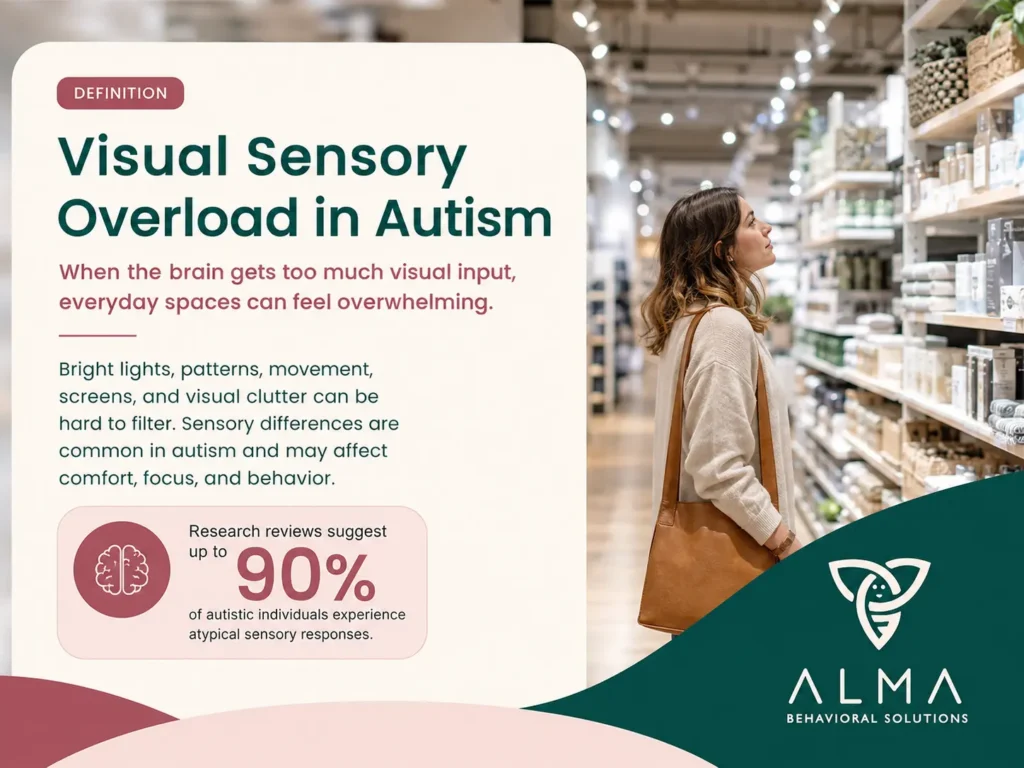
A bright grocery store may seem normal to one child, but for an autistic child, it can feel like walking into a room full of flashing signs, loud colors, moving people, and lights that will not turn off.
Research shows that sensory differences are very common in autism. It is very common for 90 percent of autistic people to have abnormal responses to sensory input, such as over-responsivity, underexposure, or sensory seeking, according to reviews.
As parents, schools and providers are more attuned to the sensory processing needs of families, some visual sensory overload autism concerns are more easily identifiable in 2026.
At Alma Behavioral Solutions, we want to educate families about what visual overload may be like, why it occurs and what they can do to help children feel safe, calm and understood.
What is Visual Sensory Overload in Autism?
Visual sensory overload is a brain’s inability to process the visual stimuli it receives. Lights, colors, patterns, movement, screens and crowded spaces can easily overwhelm some autistic children.
Children may not always be able to explain what they are experiencing. Rather they may close their eyes, turn away, retreat or attempt to escape the situation. These are not negative behaviors, but a response that the environment is too intense.
Visual Sensory Overload Explained
Things that are normal for adults may be too overwhelming for a child with visual sensitivity. For instance, a brightly lit, decorated classroom that is bustling with activity can be hard to deal with. Children react to it immediately in some; after prolonged exposure in others.
How Visual Overload Connects to General Sensory Overload
Visual overload may have an impact on other sensory input. Sounds can sound louder, touch can feel more uncomfortable and transitions might be more difficult. This can result in an overall sensory overload that may cause the child to be anxious and/or tired.
Why Visual Sensory Issues Are Common in Autism
Sensory processing differences are part of autism for many children. The DSM-5 includes hyperreactivity or hyporeactivity to sensory input as part of autism diagnostic criteria. In simple terms, some autistic children may react more strongly or less strongly to sensory information than other children.
Sensory Processing Disorder autism searches are typically by families seeking to know why their child is so affected by lights, textures, noise, motion or being surrounded by people. While sensory processing disorder and autism are not the same diagnosis, sensory processing differences are very common in autistic individuals.
Sensory Processing Differences in Autism
Some autistic children are hypersensitive. Sensory input is keenly observed in their brain! Bright lights can cause pain. Patterns may feel confusing. Movement may be distracting.
Other children are hyposensitive. They might want to get more input to their brain. A child might be interested in spinning toys, watching bright screens, lights or motion as it helps to calm them.
Visual Filtering and the Brain
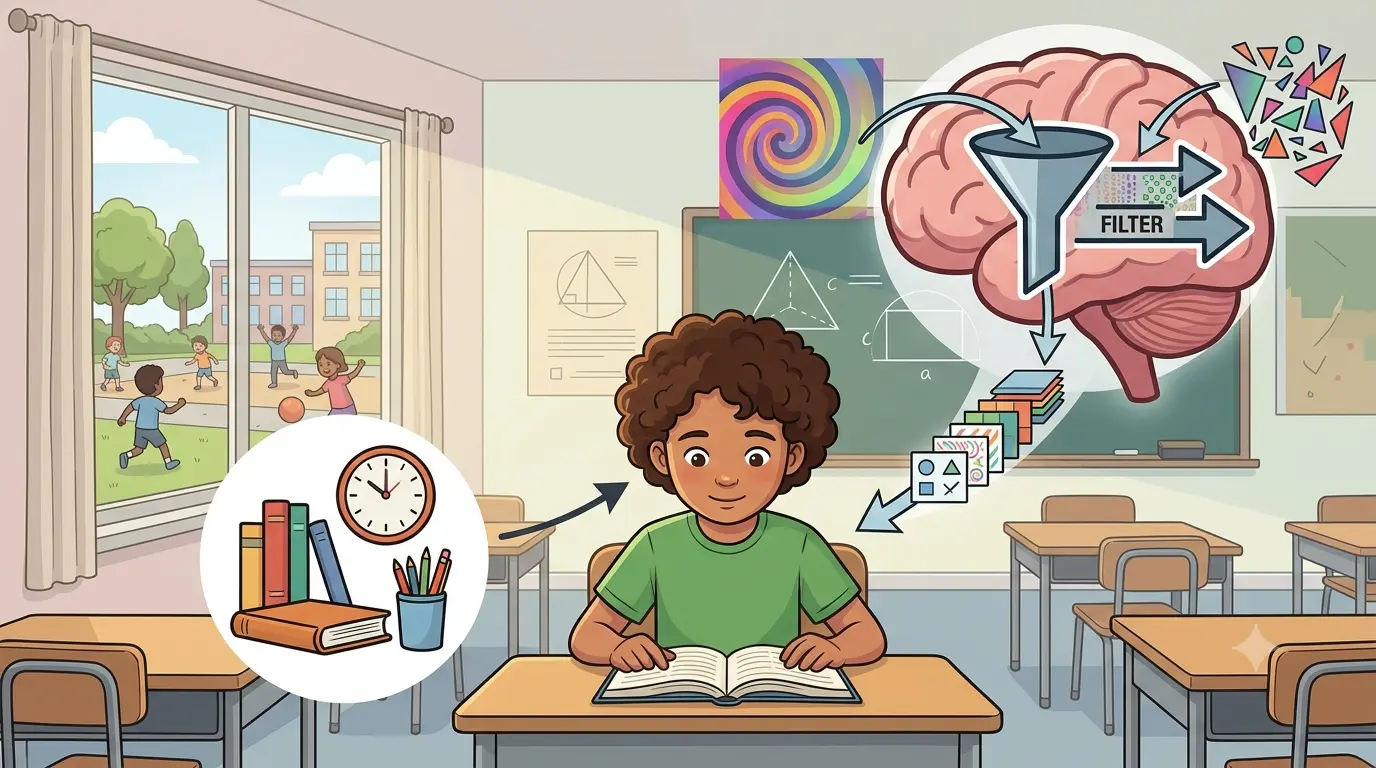
There are many people who don’t notice the background visual details. Autistic Vision may not be so easy to process for the child with autism sensory issues.
Examples of equipment that can be included in a classroom: posters, lights, chairs, papers, moving students, windows, screens, decorations. Rather than the brain only pick up on the teacher, it can pick up on all of this.
Hypersensitivity and Hyposensitivity to Visual Input
A visual hypersensitivity can manifest as a reluctance to go into bright places, cover the eyes, squint, or getting upset in bright places.
Visual hyposensitivity can manifest as gazing intently at objects, watching spinning objects or looking for bright and moving visual stimuli.
Both patterns are a form of visual sensory overload of autism and are worthy of understanding.
Common Signs and Sensory Overload Symptoms in Autism
Sensory overload symptoms can look different for each child. Some kids get active and are upset. Others close-up and go silent. Both answers can lead to a sense of being overwhelmed in the child.
Parents may be able to see patterns before they can deduce the cause. A child might find stores, classrooms, restaurants, waiting rooms to be the places where they struggle, but seem more relaxed at softer, quieter places.
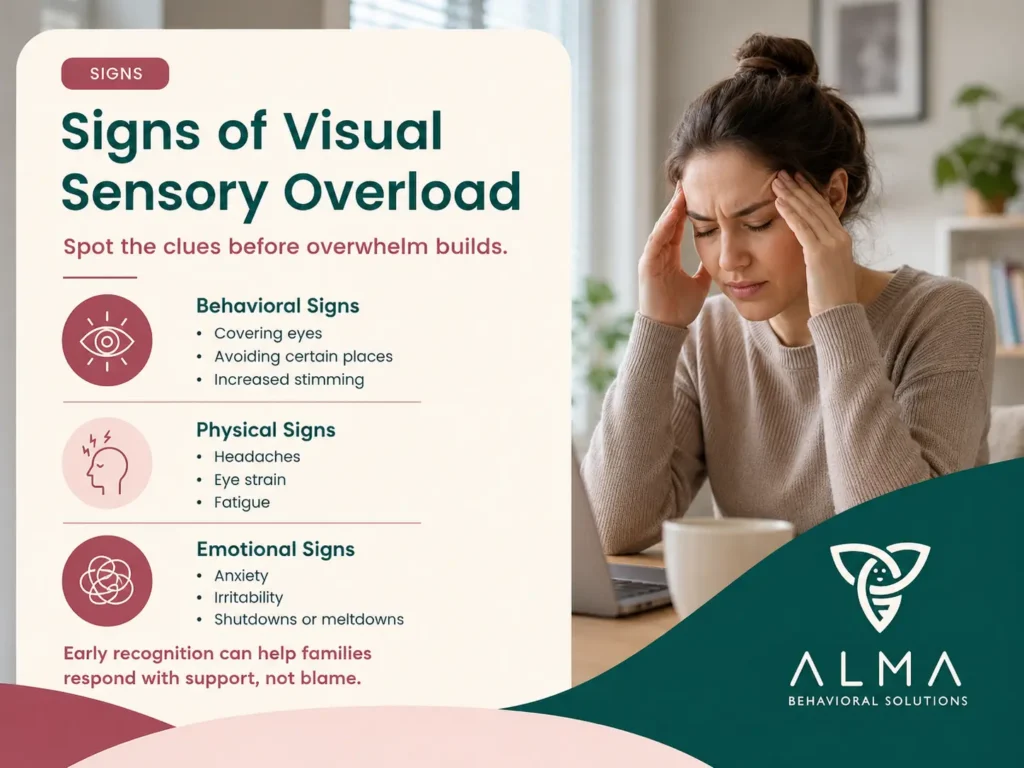
Behavioral Signs of Visual Sensory Overload
Common behavioral cues can be covering eyes, turning away, hiding, leaving room, not wanting to go into a certain room, crying, yelling, more stimming or attempts to get away. If a setting is visually overwhelming to a child, they may also refuse to do homework, watch the screens, participate in group activities, and/or go out in public.
Physical Signs of Visual Overload
Symptoms may manifest as eye strain, headaches, dizziness, nausea, fatigue, muscle tension and difficulty with concentration. Children rub their eyes, squint, hold their head or appear exhausted from being in visually stimulating environments.
Emotional Signs of Sensory Overload
Anxiety, panic, irritation, frustration, fear or emotional fatigue is possible due to visual overload. A meltdown or shutdown may happen when the nervous system has reached its limit. It’s not a planned tantrum, it’s a real one. The child has an unmet need for help, protection and sensory modulation.
Common Visual Triggers for Autism Visual Sensory Overload
Visual cues may not be apparent. For some children with autism, visual sensitivity, a room may appear perfect to one individual and horrible to the next. A child’s families can help manage their child better if they understand what environments and changes make the child feel stressed and what make the child feel regulated.
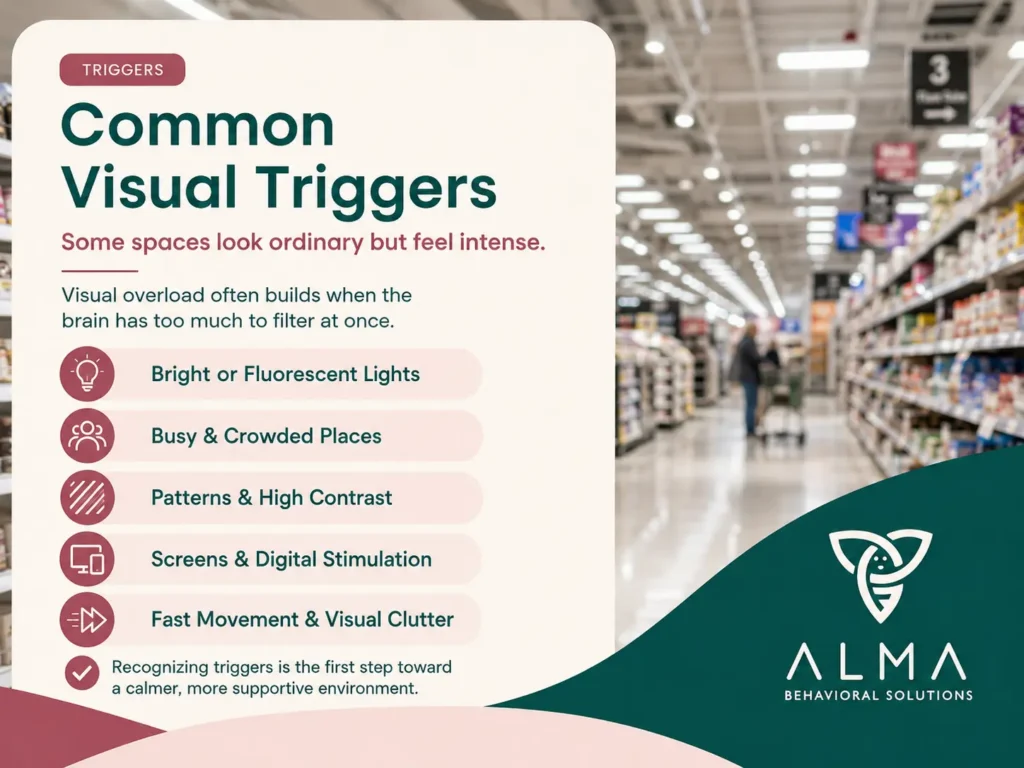
Bright Lights and Fluorescent Lighting
One of the most frequent visual triggers are bright lights. Fluorescent lights seem bright in some areas such as classrooms, grocery stores, medical waiting rooms, offices, gyms, and therapy centers. Some children may notice flickering lights that others do not notice. This may lead to discomfort, headaches, distraction and distress.
Visual Clutter and Busy Environments
Many items on shelves, multiple colors signs, cluttered walls, open toy bins and overstuffed rooms are sensory overload autism issues. There is a lot to see and process at grocery stores and malls, restaurants, airports, playgrounds and classrooms.
Patterns, Colors, and High Contrast
Stripes, checkered floors, bright colors, high-contrast designs, and busy carpets may be hard for some autistic children to look at. A child may refuse to go into or wear specific items of clothing, rooms, worksheets or spaces due to the visual pattern being uncomfortable.
Screens, Scrolling, and Digital Stimulation
Screens can be a help, but can be an overload. It can be a strain on the visual system to watch fast videos, scroll, flash, play games and get notifications. Balance screen time, breaks, and a less stimulating environment will help to minimize visual stress.
Crowds and Fast Movement
Transitions of people, traffic, hustle and bustle of hallways, sports and movement in the playground can be overwhelming. The child’s eyes and brain may tire easily as they try to follow everything, and develop dysregulation.
Are Autistic People Sensitive to Light?
So many families ask the question, “Are autistic people sensitive to light?” Yes, many autistic people are sensitive to light, but not everyone is sensitive to light in the same way.
Some children don’t like bright lights. Some like to have dim lighting in their rooms. Some have hats or sun hats on their head. Some become upset under fluorescent lights but do well in natural or warm lighting.
Light sensitivity can impact on behavior as the child may not be able to focus, listen, sit still, or to finish tasks. The behaviour can be a child’s way of expressing, “Too much for me.”
How Visual Overload Affects Daily Life
Visual sensory overload may impact learning, play, treatment, family activities and routine. Child feels overwhelmed by environment and wants to participate.
School and Learning
School can be visually challenging. Learning can be more difficult in crowded hallways, with moving classrooms, with screens, with colored bulletin boards, and with bright lights. Sensory problems with vision may cause a child to appear disinterested or uncooperative.
Home Routines
Visual overload can impact sleep, mealtime, dressing, cleanup, homework and screen time. Overcrowded play area, noisy lights in bathroom or a messy room can add to stress. People will find it easier to go about their day if there are more calm spaces and routine.
Community Settings
Sensory stress can occur at stores, restaurants, birthday parties, parks, medical offices and more. Being prepared will help. Families can select quieter times, take comfort items and get the child accustomed to the space prior to its use in a busy environment, or find exits.
Social Participation
Social events tend to be noisy, and involve people, movement, lights and decorations. These may be exhausting settings, especially the visual sensory overload. The environment may be too intense, causing a child to leave early, go off, not make eye contact or become upset.
Practical Strategies to Reduce Visual Sensory Overload
Support does not mean ‘no sight’. The aim is to lower the unneeded stress and for the child to develop safe, functional methods of communicating and reacting to the stress. When sensory need matches the small change it can make a big difference.
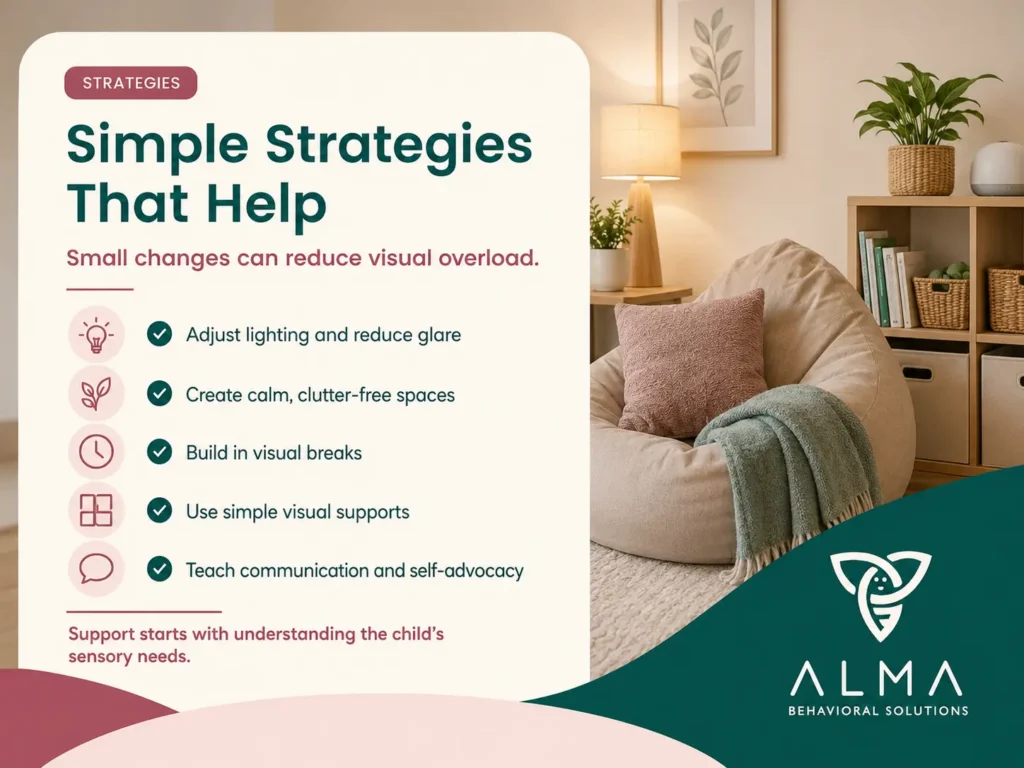
Adjust Lighting When Possible
Many children will benefit from softer lighting. Use of warm bulbs, dimmer lights, lamps rather than overhead lights, curtains and blinds can help to minimize discomfort. Wearing sunglasses, hats or visors may also be helpful at times in bright environments when they are safe and appropriate.
Reduce Visual Clutter
The brain works better in a calm environment. Less clutter, simpler room layouts, clearly labeled bins, solid colors and fewer decorations can help minimize the visual overload. Begin in one location, like a homework area, a quiet corner or bedroom.
Build in Visual Breaks
Visual breaks are visual rest periods. A child can enjoy a break from screens, going to a darkened room, closing their eyes for a few moments, or going for a few minutes to a low stimulation environment. Breaks are best prior to the child becoming overloaded.
Use Clear and Simple Visual Supports
Use of visual schedules, first-then boards, choice boards and social stories can assist children to understand what is next. Make these tools simple. Excessive images, colors or actions can be visually overwhelming.
Support Communication and Self-Advocacy
Simple methods, which children can learn, to communicate their sensory needs. May respond with “too bright,” “break,” “help” or “all done.” Some children may use gestures, cards, or AAC devices. Communication allows the child to seek assistance before he or she overloads.
Track Patterns and Triggers
Families are able to monitor what occurs before the sensory overload symptoms occur. Useful information are light, noise, screen time, sleep, hunger, number of people, place and time of day. Patterns can provide direction for effective support plans.
How ABA-Based Support Can Help With Visual Sensory Challenges
Through ABA, families can learn how to understand and connect sensory experiences, behaviour, communication and everyday activities.
Understanding the Function Behind Behavior
If a child runs away from a bright room, she or he might be seeking relief from some discomfort. If a child is covering his or her eyes during a lesson, it may be an attempt to block visual input.
Analyzing function of behaviour enables adults to respond with understanding and effective strategies.
Teaching Functional Communication
Children can be taught definite means for seeking assistance. Communication may include spoken words, signs, pictures, gestures, or AAC.
If a child can ask for a break, then he or she may feel safer and require less frequent of the intense behaviors that represent a distress message.
Building Predictable Routines
Predictable routines reduce stress. Children feel more prepared in the face of a lot of visual stimulation if they know what to expect next.
Visual schedules, reminders, transition warnings, practising coping skills before the event or difficult setting are examples of preparation.
Creating Individualized Support Plans
Each child’s sensory profile is unique. The triggers, communication skills, daily routines, developmental needs and family goals should all be considered when creating a helpful plan.
Supporting Visual Sensory Needs at Home, School, and in the Community
A child might require other tools at home, school, therapy and public locations. Through a team approach between caregiver, teacher and therapist, a more soothing and predictable experience can be achieved.
At Home:
Home support can involve having quiet rooms, fewer toys, less clutter, organized toys, low lighting and a quiet room to reset. A designated Sensory Recovery Room might be a bedroom or cool corner.
At School:
Measures may involve school support, removing disruptive or brightly lit areas to sit, using simple worksheets, movement breaks and working with teachers. Teachers can also observe for signs of visual overload, including squinting their eyes, closing eyes and turning away.
In Public Places
With some planning, public outings can be simpler. It is a good idea for families to visit during quieter times, pack a hat or headphones, remind everyone about the rules and find a quiet spot before arriving. Small adjustments can help children participate without feeling overwhelmed.
During Therapy Sessions
Regulation is to be supported in therapy spaces. Participation can be impacted by the lighting, materials, seating, screens and room setup. Children who are visually comfortable can learn, communicate and interact better.
Professional Supports for Visual Sensory Overload
A team approach may be beneficial for a few families. Various professionals will be involved with a different aspect of the child’s sensory, behavioural and developmental needs. Support should always be individualized and based on the child’s real-life challenges.
Occupational Therapy Support
Occupational therapies have the capacity to evaluate sensory needs and recommend regulation strategies. They might suggest sensory diet, changes in surroundings or comforting supports.
Behavioral Health and ABA Support
ABA therapy focuses on improving communication, coping skills, daily routines, transitions, and caregiver training. Its goal is to help children express their needs, develop essential life skills, and achieve greater independence in a safe and supportive environment.
Vision or Medical Evaluation When Needed
If a child is having frequent headaches, eye pain, extreme sensitivity to light, dizziness or continued eye discomfort, a medical or vision related evaluation could be beneficial.
No one treatment is offered as a cure for sensory overload. Families can consult with qualified providers to determine the type of evaluations or supports needed.
Conclusion and Next Steps for Families
The sensory overload is a very real issue for autistic children and can impact their learning, playing, communication and everyday life. Knowing the signs and triggers enables families to be more patient and supportive.
When a child is sensitive to lights or visual clutter, or is not interested in screens, patterns or busy areas, he or she is not being difficult. They might be trying to make sense of what they’re seeing around them.
Support begins with observing, being caring and making some changes. Avoid over-lit, over-cluttered environments, visual contrast, too many communication devices and consistent routines can all make life easier.
If your child has issues with visual sensory overload or sensitivity to light, or if he or she experiences sensory overload symptoms or other sensory processing challenges due to autism, Alma Behavioral Solutions can help your family understand your child’s needs and provide strategies that are helpful in everyday life. To learn more or speak with our team, call Alma Behavioral Solutions at (747) 250-8494 or E-mail info@almabehavioralsolutions.com.
FAQs About Visual Sensory Overload in Autism
Why does my child cover their eyes in bright places?
If they cover their eyes, it could mean that they feel the light is too bright or the space is overstimulating. Some children use this as a way to reduce input quickly. A calmer area, softer lighting, or a short break may help.
Can a visually busy classroom affect learning?
Yes. Many bright lights, posters, screens, movement, and visual details in the room may cause difficulty for a child in focusing. The child could be distracted but in reality it may be sensory overload.
What are early clues that a child is getting overwhelmed?
Initial signs can be anything from squinting and rubbing eyes, turning away, becoming quiet, stimming more, asking to leave, or refusal of task. There can also be physical symptoms such as a headache or tiredness.
Can sensory processing disorder autism concerns include vision?
Yes. Parents typically look into sensory processing disorder autism when they observe excessive responses to light, noise, textures, activity or visual noise. Sensory processing differences can include vision and other senses for autism.
Should screen time be removed completely?
Typically, it’s about balance, rather than fear. While screens are helpful, fast paced content, bright settings and long sessions of screen time can lead to increased overload. Time of day, lighting and more peaceful scenes can help.
How can Alma Behavioral Solutions support my family?
Our team can help in identifying patterns, teaching functional communication, creating routines and providing strategies for caregivers. Support is provided according to the child’s needs, family objectives and environments.