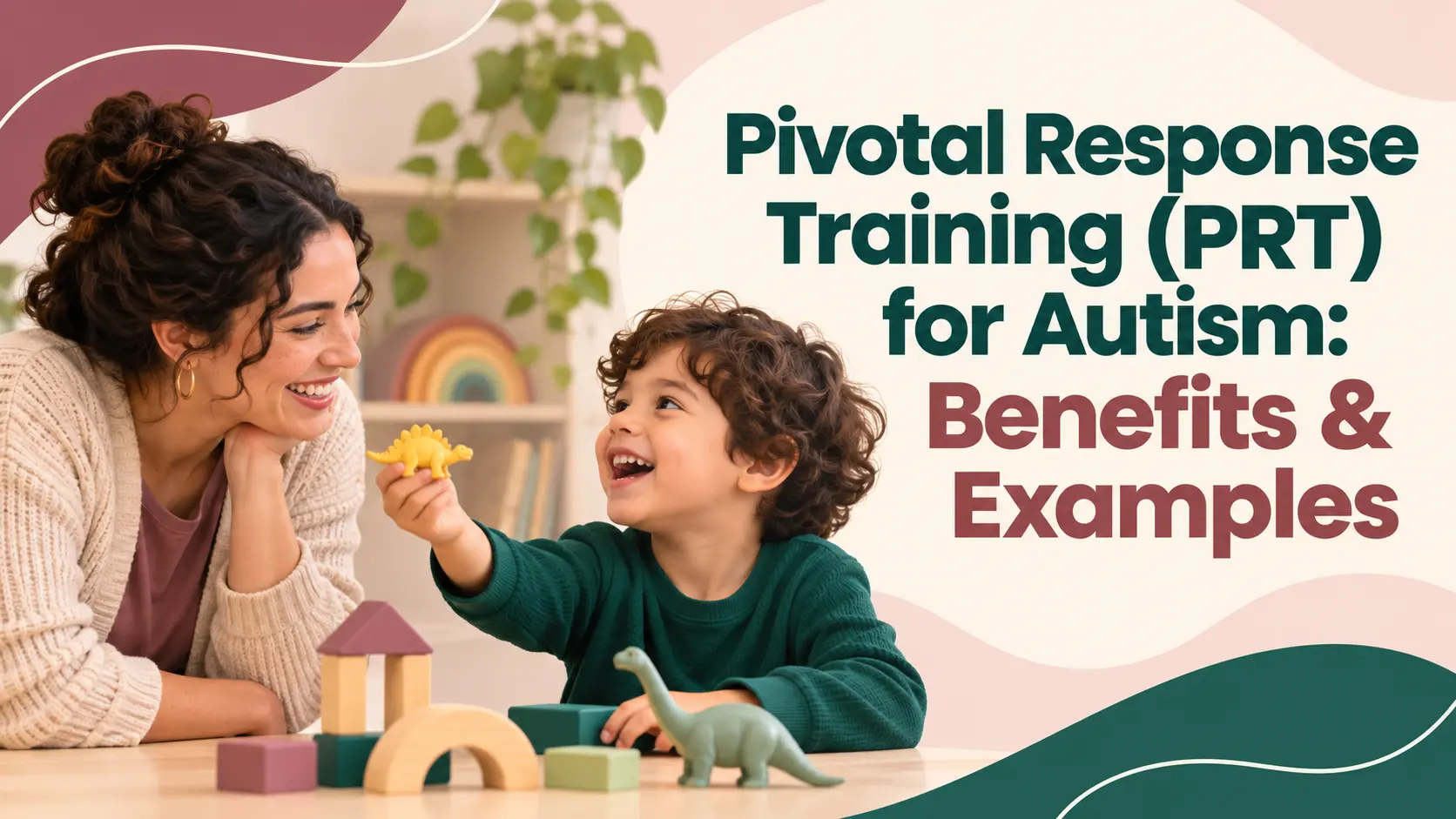

A favorite toy, a game or a shared moment of laughter can be a moment of learning. When activities relate to children’s interests they are often more willing to participate.
Pivotal Response Training (PRT) builds on these moments to encourage meaningful communication and participation through play and everyday interactions, rather than relying solely on structured instruction.
When families are considering pivotal response training for autism, we know they are looking for helpful answers to how it works, what benefits it offers, and how it’s used in real life.
What Is Pivotal Response Training (PRT)?
Pivotal Response Training (PRT), also called Pivotal Response Treatment, is a naturalistic intervention based on Applied Behavior Analysis (ABA). It teaches meaningful skills by working with children’s interests.
Unlike individual tasks, PRT is based on developmental areas which could impact learning in multiple settings such as communication, motivation, and independent participation.
Sometimes called pivotal response therapy, this approach incorporates purposeful learning into play and daily routines. Activities remain flexible while working toward clearly defined, individualized goals.
PRT is one approach within ABA, not a separate alternative. Different ABA Therapy Programs may incorporate naturalistic and structured teaching according to individual needs.
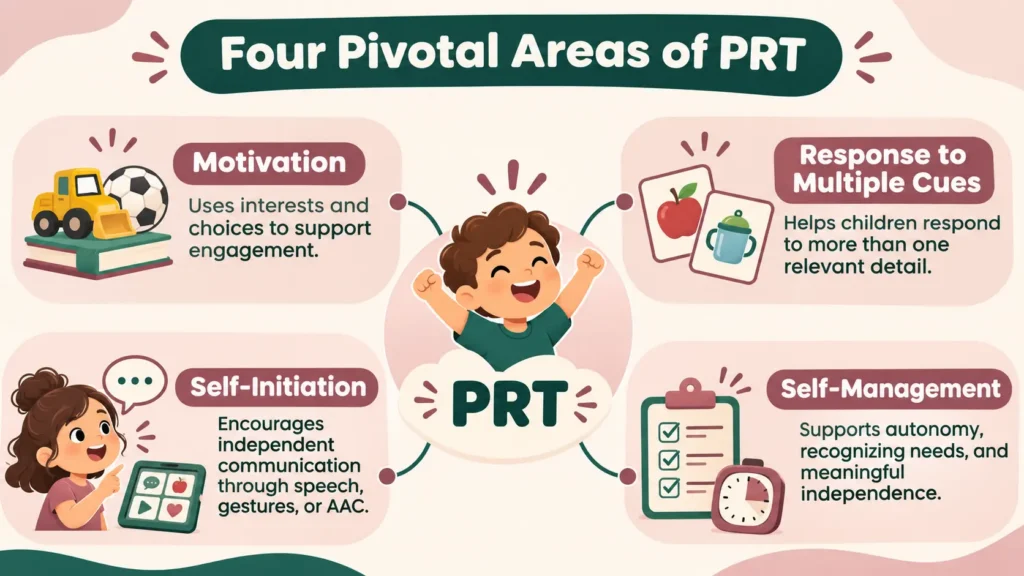
What Are the Four Pivotal Areas of PRT?
Child Motivation
Pivotal response training strategies are based on what children really enjoy. Providing children with choices can help to engage them and help learning to be relevant.
Example: A child chooses a favorite puzzle from several available activities. The adult participates in the activity, facilitating the child’s involvement in the play.
Response to Multiple Cues
Pivotal response training techniques can help children notice multiple relevant features of an object or situation instead of relying on just one detail when responding.
Example: A child places a large blue block among blocks of various sizes and colors during block play, based on their individual needs for support.
Self-Initiation
Pivotal response training interventions allow children to take the lead in initiating communication, using speech, gestures or augmentative and alternative communication (AAC) rather than waiting for prompts.
Example: A child independently requests help opening a toy container. The adult understands the request and provides support without having to ask the child first.
Self-Management
Pivotal Response Treatment can be used to promote self-management skills by teaching children to identify their needs, make choices and use individual tools to access activities more independently.
Example: A child notices sensory discomfort and uses a visual reminder to request a break independently, with the adult respecting their request without imposing conditions.
How Does Pivotal Response Training Work?
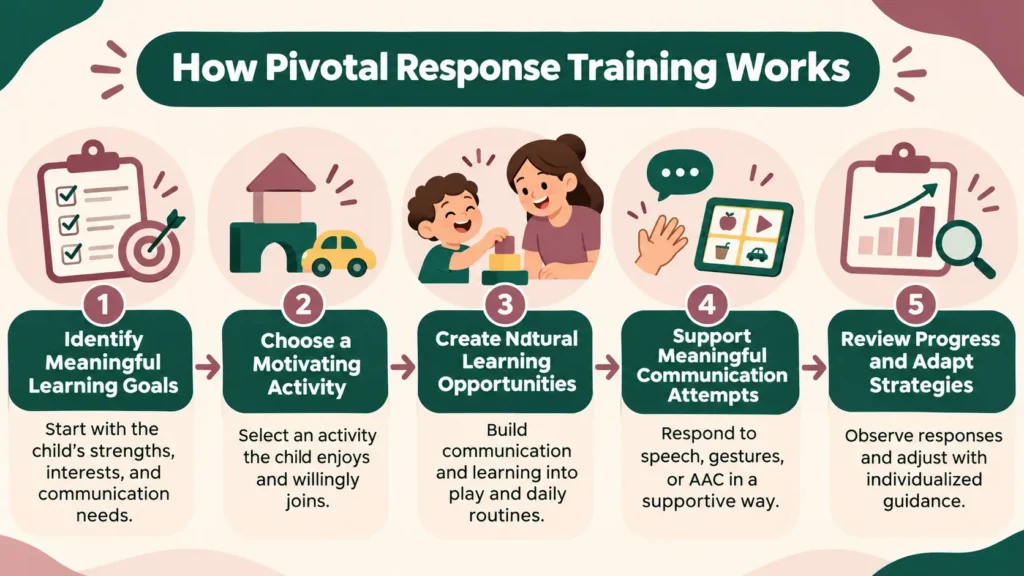
• Identify meaningful learning goals: Pivotal Response Treatment starts with goals based on individual strengths and communication preferences, family priorities and being assessed by a qualified professional.
• Choose a motivating activity: Provide accessible opportunities, listen to the child and support their interest rather than forcing them to choose an adult-led activity.
• Create natural learning opportunities: Incorporate a relevant skill into the activity, as may happen during Direct ABA Therapy, with individualized professional planning and support.
• Support meaningful communication attempts: Give time for response; accept various modes of communication and offer support as needed; do not expect a perfect response in order to acknowledge the child.
• Review progress and adapt strategies: Note responses and provide comfort; modify instruction as needed. These steps are examples of learning opportunities in PRT and not necessarily a standardized clinical protocol.
Benefits of Pivotal Response Training for Autism
Potential pivotal response training benefits may extend across several developmental areas. But the experiences of each child are unique and progress is a function of individual needs, goals and support.
• Functional communication: Children can learn to communicate more effectively to express preferences, request help, share information, or communicate needs.
• Spontaneous social interaction: PRT may encourage children to initiate meaningful interactions without requiring constant instructions or reminders from adults.
• Meaningful learning engagement: Learning may be supported by activities related to personal interests, which may lessen the need for unrelated incentives for active participation.
• Skill generalization: Practicing skills in varied situations may help children use them with different people, materials, and settings outside therapy when useful to them.
• Growing independence: Individualized learning opportunities may support children in making decisions and completing personally meaningful tasks with less assistance over time.
Pivotal Response Training Strategies and Techniques
• Following the Child’s Interests: Pivotal response treatment techniques use preferred materials and activities as starting points, adapting teaching when the child’s interests or engagement change.
• Sharing Control and Offering Choices: Adults work with the children, making decisions on materials, activities and participation and not directing every interaction.
• Providing Clear Learning Cues: Children recognize learning opportunities through simple and understandable cues. Instructions should be tailored to their communication, processing time and level of understanding.
• Using Natural Reinforcement: Give positive reinforcement directly related to the response. Essential needs, comfort, and access to communication must never depend on completing a task.
• Encouraging Meaningful Communication Attempts: Acknowledge genuine attempts even when responses are incomplete. Don’t insist on perfect pronunciation, eye contact or words spoken before responding to the communication.
• Mixing Familiar and New Skills: Alternate achievable tasks with new learning goals. Supporting ABA practice of prompt fading involves providing less support over time when it is appropriate for the child.
Pivotal Response Training Examples in Everyday Life
These hypothetical pivotal response treatment examples show how everyday pivotal response training activities can connect communication attempts with meaningful outcomes, while keeping play enjoyable and respecting each child’s choices.
• Playing With Bubbles: A child indicates that they wish to take another turn during the bubble game. The adult responds by blowing more bubbles, continuing their activity.
• Drawing Together: An adult offers two crayons. Adult provides the color to continue drawing while the child uses AAC to indicate preference.
• Building a Toy Train: During play, tracks part and the kid gestures for help. The adult assists them to rejoin in an effort to complete the construction.
• Reading a Picture Book: A child points toward a picture. Caregiver responds to child’s interest with a comment rather than testing comprehension.
• Playing With a Toy Kitchen: Child selects a cooking activity and invites the adult to be involved. The adult participates according to the child’s direction.
How Does PRT Compare With Other ABA Teaching Approaches?
Pivotal Response Training within ABA shares naturalistic principles with other teaching approaches. The order of selection is not universal, but depends on the child’s goals, preferences, and learning needs.
| Feature | PRT | DTT (Discrete Trial Training) | NET (Natural Environment Teaching) |
| Learning focus | Pivotal developmental skills | Specific, clearly defined target skills | Functional everyday skills |
| Teaching approach | Interest-led, naturalistic teaching | Planned, structured teaching trials | Learning embedded in natural activities |
| Environment and activities | Preferred play, familiar routines, and shared activities | Organized, focused practice in suitable settings | Home routines, play, and community activities |
| Reinforcement | Outcomes naturally related to responses | Individually selected reinforcers | Often directly related to activities |
How Parents Can Support Pivotal Response Training at Home
Pivotal response training at home can be integrated into everyday life, with the help of the professional. For parents, we encourage a balanced approach.
• Follow individualized guidance: Discuss with your child’s therapist what activities are appropriate and how to support your child’s goal safely in your home environment.
• Respect willingness and sensory needs: Stop when your child is uncomfortable or not interested. Offer breaks or the option to stop.
• Keep communication tools accessible: Make AAC devices, picture boards, or other preferred communication supports readily available throughout the entire day.
• Keep opportunities manageable: Select small, fun times in existing routines, leaving opportunities for free play and relaxation without learning demands.
• Share observations: Discuss questions and concerns with your therapist. Our Parent Support Services can help families understand individualized ABA goals.
Is Pivotal Response Training Evidence-Based?
Pivotal Response Treatment research suggests potential improvements in language and communication for young autistic children. Broader social and adaptive outcomes remain less consistent.
Study sizes, treatments, and outcomes vary, making it difficult to be sure conclusions apply to all children. Monitoring progress should be directed towards significant changes.
Clinicians may assess:
• Independent communication: How often children communicate with adults without unnecessary adult assistance.
• Engagement: Willing participation, enjoyment, and comfort during relevant learning activities.
• Skill generalization: Whether learned skills are exhibited from person to person and place to place.
• Individualized goals: Measurable progress toward priorities established with children and families, alongside their well-being.
Is PRT Therapy Suitable for Every Autistic Child?
PRT therapy for autism is not automatically suitable for every child. Professional assessment should consider developmental needs, existing strengths, communication preferences, and family priorities.
Throughout the treatment, sensory comfort and child assent are important. Children should be allowed to refuse activities, to take breaks, or to select different activities.
Goals should have meaning for the child and not require eye contact, compliance, or reduce stimming behaviors that are harmless and serve a purpose.
Frequently Asked Questions About Pivotal Response Training
What Age Is Pivotal Response Training Appropriate For?
Pivotal response training has been studied primarily in young autistic children, but there is no single age that determines suitability. When determining an approach to support development, the qualified professional can take developmental readiness, communication needs, and learning goals into consideration.
How Long Does Pivotal Response Treatment Take?
Pivotal Response Treatment has no universal duration or weekly schedule. Treatment is a period of time that is dependent on the individual goals, support needs, progress, and family situation. Clinical reviews are used to decide if the ongoing plan is suitable or if it needs to be changed if the child’s needs have changed.
Who Is Qualified to Provide Pivotal Response Training?
Pivotal response training should be delivered by appropriately qualified professionals with relevant training and experience. When delivering this intervention, families may request details of the professional qualifications, PRT training, supervision arrangements and whether the provider practices within the scope of their profession.
Can Insurance Cover Pivotal Response Treatment?
Insurance may cover Pivotal Response Treatment under eligible ABA or behavioral health benefits. Coverage is subject to plan, medical necessity, provider qualification and authorization. Families should check with their insurance company first to see if they are eligible, what is covered and what the expenses will be.
Can PRT Be Used Alongside Speech Therapy?
PRT therapy for autism can be integrated with speech therapy, if both therapies are working on complementary communication goals. Professional cooperation ensures strategy alignment and diminishes conflicting expectations. PRT is not a substitute for individual speech and language evaluation or intervention as necessary.
Is Pivotal Response Training Delivered Individually or in Groups?
Pivotal response training interventions may involve individual instruction or supported interactions with other people, depending on treatment goals. Arrangements for delivery should be based on child’s choice, communication, and comfort. Individual assessment can be used to recommend appropriate formats with a qualified provider.
Supporting Your Child’s Growth With Individualized ABA Therapy
We are familiar with the fact that each child has his/her own strengths, interests, and communication style at ALMA Behavioral Solutions. Support that is meaningful starts with understanding what is important to them.
Whether you are exploring Pivotal Response Training (PRT) or other approaches, our individualized ABA therapy focuses on skills that support communication, motivation, and growing independence.
Through our in-home ABA Therapy and parent support services, we encourage family participation and collaborative learning that respects the daily needs of children across Southern California.
If you have questions about ABA support, Connect with our team. We welcome the opportunity to discuss your family’s priorities and next steps.