

Introduction: Why Should Autism Care Support the Whole Child?
Autism care should never focus on a diagnosis alone, because every child has their own way of learning, communicating, feeling, playing, and responding to the world around them.
A whole-child autism care model considers the entire child’s development such as behavior, communication, sensory needs, emotional regulation, daily living, family routines and learning environments.
This autism care enables families to find out what is perhaps triggering a kid’s advancement and what sort of assistance may make life easier, safer, and more significant.
Alma Behavioral Solutions offers individualized autism care in the form of Autism Care therapy, child development support, autism ABA therapy, and autism behavioral support tailored to a child’s strengths, needs and family goals.
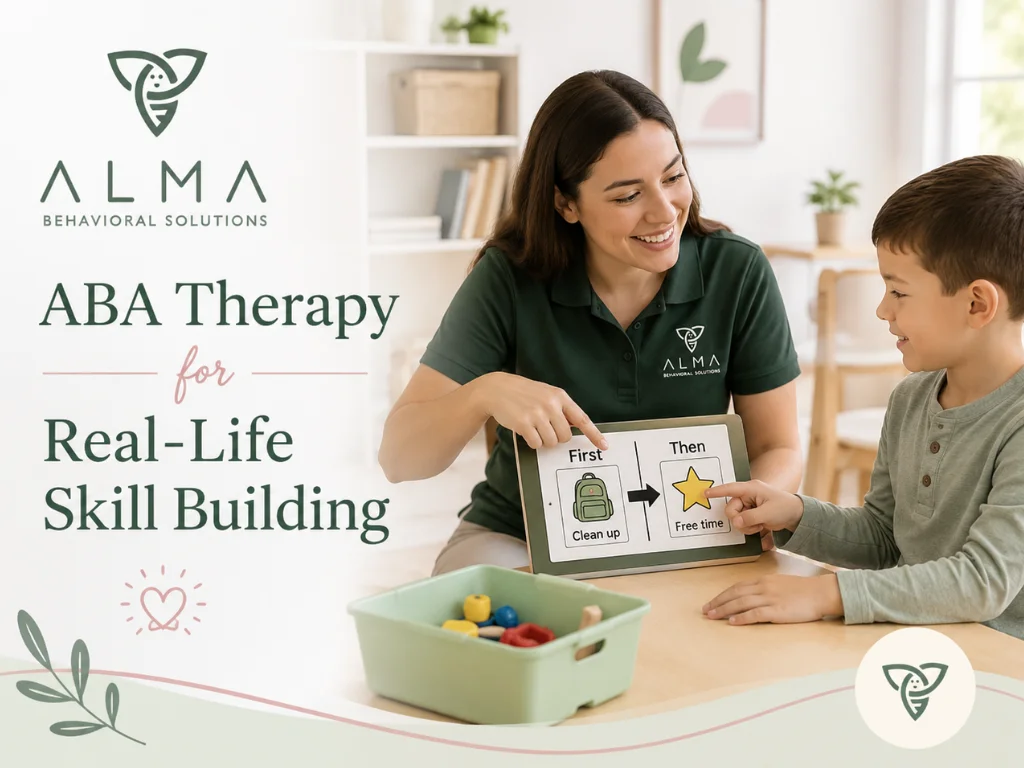
What Is Whole-Child Autism Care?
Whole-child autism care is the child’s perspective and how to care for the child beyond the diagnosis. This autism care approach does not place the emphasis on just one behavior or skill, but rather considers how communication, learning, sensory needs, emotional regulation, daily activities and family life impact development.
A good whole-child plan will incorporate:
- Communication support to help the child express needs, choices, and feelings.
- Autism behavioral support to understand challenging behaviors and teach useful replacement skills.
- Child development support for daily living, play, social interaction, and independence.
- Family-focused strategies to support the use of therapy goals in daily activities.
Why a Personalized Autism Care Plan Matters
Personalised autism care is important because every child learns, communicates and reacts to help in their own unique way. One plan which is beneficial for one child may not work for another child, particularly when they have differing sensory needs, behavior patterns, family routines and developmental goals.
A good autism care approach should comprise:
- The child’s current skills: communication, play, learning, daily living, and social interaction.
- The child’s support needs: Emotional control, feeding, sleep or sensory issues.
- The family’s goals: Activities that are most important in the community, school, and at home.
Alma Behavioral Solutions creates autism therapy based on the child’s life, rather than a straitjacket. We provide autism behavioral support and child development support to develop realistic goals for children to use more confidently in real-world situations, through ABA therapy for autism.
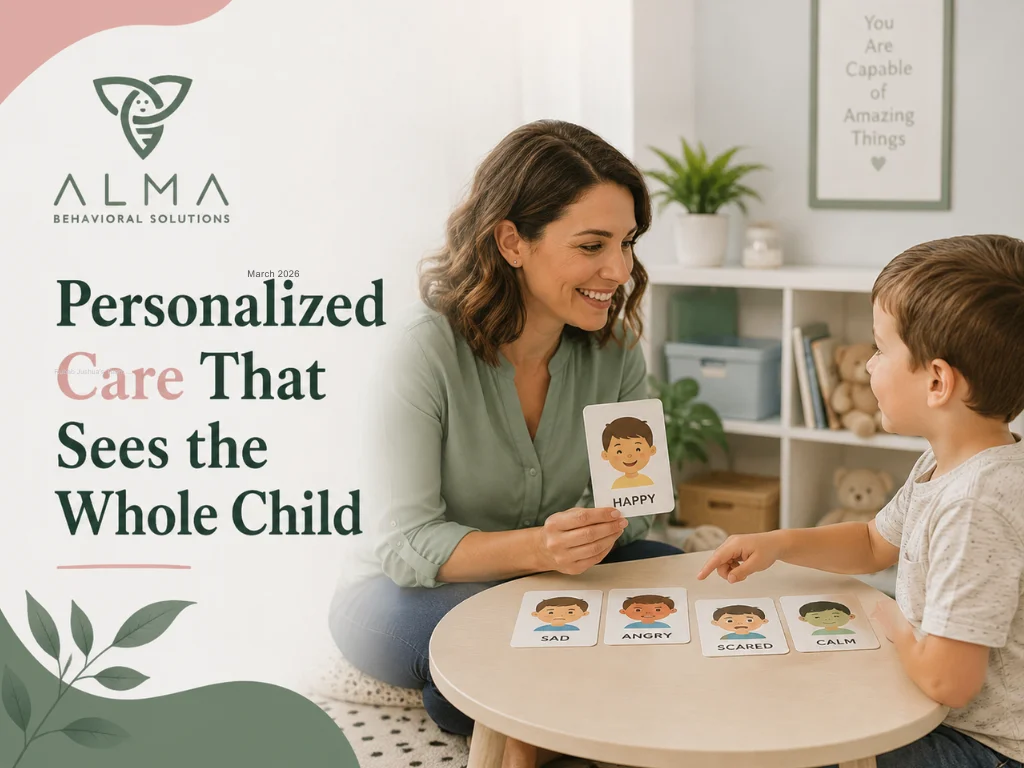
The Whole-Child Autism Care Framework: Key Areas to Assess
A whole-child approach can inform families and providers about what might be impacting a child’s learning, behavior, and development. It is not a substitute for medical advice. Rather, it provides the opportunity for families to understand what they might need to address and professional support.
Medical and Biological Factors
Medical evaluation may be indicated for some children who have concerns related to genetics, metabolism, seizures, sleep, gastrointestinal symptoms, feeding, nutrition, and medication requirements.
The research and clinical reports indicate that many children with autism also have health issues such as GI problems, seizures, anxiety and sleep issues. Seizure activity had been reported as occurring in approximately a quarter to one-third of children with autism. A seizure can be seen as shaking and unconsciousness or subtle as staring spells or a lack of attention.
Families should consult to qualified health care providers when they observe seizures or seizures-like behavior, developmental regression, unusual sleep patterns, persistent pain, feeding abnormalities or significant changes in behavior.
Sleep, Nutrition and Gastrointestinal Health
A child’s day can be influenced by his or her sleep and digestive comfort. Sleep disturbance could impact approximately 80% of children diagnosed with autism, including difficulty falling asleep, staying asleep or waking early in the morning.
GI symptoms are also common. The Autism Research Institute reports that gastro-intestinal issues are as much as four times more common in children with autism than in the general population, with symptoms such as constipation, diarrhea, reflux, abdominal pain and gas.
Parents are able to monitor bowel movements, sleep patterns, reactions to food, signs of discomfort and behaviour changes. Some kids might feel better and feel more ready to learn when their health issues are treated or more well managed.
Communication and Social Development
Communication is an integral part of child development support. Some children require assistance with their speech; others require assistance with their gestures, pictures, devices, eye gaze, play, turn-taking, emotion expression or social understanding.
Before communication starts to become clear, a child may do so in numerous ways. Actions, gestures, expressions, noises and movements may all have significance.
Speech-language therapy, developmental support, and ABA therapy for autism can work together to help a child request, refuse, ask for help, share interests, and connect with others. For some children, understanding Autism Scripting can also be an important part of building effective communication, as scripting may serve as a meaningful step toward more flexible language use. Good support is about effective communication, rather than about having to perform.
Behaviour and Daily Living Skills
Often behaviour is a form of communication. A child may cry, scream, run, refuse, hit, etc. when he/she is overwhelmed, tired, hurting, does not know what to expect or doesn’t know how to express a need.
Autism behavioral support assists families to realize why a behavior is occurring and what skill the child may need to have in lieu of that behavior. For example, a child might need support with transition, visual cues, choice making or a break when throwing things during clean up.
Autism ABA therapy helps with autism communication, safety, daily living skills, independence and/or decrease in behaviors that impede learning. The most useful ABA goals are useful and practical like tolerating a haircut, asking for water, brushing teeth, waiting for a short time, and playing safely with sibling.
Sensory and Motor Development
Sensory needs can impact on children’s experiences of the world. Some children may be sensitive to noise, light, touch, clothing, movement, smells or food textures. Still others find pressure, spinning, jumping, chewing, and repetitive movement to be regulating.
Motor development also is important. Children need assistance in balancing, co-ordinating, oral-motor skills, planning movement and/or body awareness.
OT, sensory supports, movement breaks, visual routines, calm spaces, and caregiver strategies are examples of the holistic autism treatments. A calm, regulated child is likely to be more present, more able to communicate and more able to participate.
Home, School and Community Environment.
Children grow up in a variety of contexts. Home, school, caregiver, peer and community experiences should all be considered when developing a therapy plan.
Some children require a visual schedule, routine, sensory friendly space, warning before transition, and/or different ways of providing instructions. This can involve working with the teacher, IEP planning, 504 accommodations, and learning how to edit routine in the classroom.
How ABA Therapy Fits Into a Whole-Child Autism Care Approach
ABA therapy for autism can be a valuable part of whole-child autism care when it is individualized, respectful, ethical, and developmentally appropriate. It should be based on the actual needs of the child and not be “one size fits all”.
ABA is helpful because it focuses on understanding behaviour, teaching helpful skills and modifying the environment to support the child’s ability to learn with greater ease and confidence. ABA can help with communication, emotional regulation, learning daily living skills, making transitions, safety, play, and independence, as part of a personalized autism care plan.

Good ABA should make interesting questions:
- What skill will help the child to feel less frustrated?
- What does the child need to communicate more clearly?
- What routines are the most important to the family?
- What supports the child to feel safe to learn?
Taking care of the caregivers is also essential. Using the same skill for a child during therapy sessions, and then at meal time, bed time, school drop off or play.
Alma Behavioral Solutions offers autism behavioral support and autism therapy for autism to support children in acquiring functional skills to live in everyday life.
Building a Practical Therapy Roadmap for Child Development Support
A therapy roadmap provides families with a roadmap. It can assist parents to comprehend exactly where the child is at, what is essential and just how support will be provided throughout the day.
Start With a Comprehensive Assessment
Parent input, child observation, developmental history, communication skills, behavior patterns, sensory needs, daily living skills, school concerns, and family priorities are some useful considerations in making an assessment.
The objective is not just to call out challenges. The purpose is to identify the factors that facilitate the child’s success. An effective assessment also recognizes strengths as strengths can be the gateway to learning.
Set Meaningful Therapy Goals
Goals need to be realistic, measurable and appropriate for the child’s level. Helpful goal is not too easy, not too hard. It must be not only easy, but also stretch the child gently.
For example, a goal can be about requesting a desired object, remaining with a caregiver in a store, experimenting a small thing in hygiene, or using an “on call” card prior to upset.
Coordinate Support Across Daily Life
Therapy is most effective when the same skills are also reinforced in the home, school and community setting. Everyone from a caregiver to a therapist, teacher to medical professionals can be involved.
Consistency in routines increases the level of child development support. Eating times, playing, dressing up, going to sleep, changing activities and events from the community can all be learning opportunities.
Four Pillars of a Whole-Child Autism Care Plan
A complete autism care approach should include the child’s environment, skill-building needs, wellness, and therapeutic or medical support.
Environment
A child’s surroundings can make them feel calm or out of control. Some modifications at home, school, therapy and/or community may be necessary for the child to be able to participate more comfortably.
The use of visual supports, predictable routines, calm areas, clear instructions and sensory-friendly adjustments will help to decrease stress. If the setting is more comfortable, so will be the behaviour.
Skill-Building
Skill building can be related to communication, play, socialization, emotional regulation, daily living, learning preparedness, safety and independence.
ABA therapy, speech therapy, occupational therapy, parent training and school support can all be of assistance. The best goals correspond to real life scenarios – seeking assistance, having a morning routine, being able to join play, or to manage waiting.
Wellness
Sleep, Nutrition, Movement, Emotional health, sensory regulation and stress support are all part of wellness. Additional issues that need to be addressed in some kids include anxiety, inattention, mood issues, feeding problems, and/or GI discomfort.
Families should seek professional advice when considering change of diet, supplements, medication, assessment and treatment for seizures and digestive issues, sleep issues.
Therapeutic and Medical Support
For some children, a coordinated intervention plan with behavioral, developmental, medical, mental health, and school-based services or medications (when clinically indicated) is helpful.
Medication does not have to be used and is just one tool. It could be a component of a bigger strategy for some kids. It is important that families have clear information that will enable them to make informed decisions with qualified professionals.
Why Parent Involvement Is Essential in Autism Therapy Services
The parent can assist the child in practicing therapy skills in real-world situations, beyond therapy sessions. Families don’t have to be therapists but they are a vital part of the support child development.
- Daily practice: Children can develop independence, flexibility and communication skills at mealtimes, at bedtime, at play and when they are getting dressed and at school.
- Consistent support: If parents know the therapeutic goals, they can apply the strategies they have learned in therapy in their home, school, and community.
- Better skill use: Autism therapy services are more effective when children practice skills in familiar places with familiar people.
- Family confidence: Parent training assists caregivers to respond to behavior in a less stressful way, supports communication and prepares for less stressful transitions.
Alma Behavioral Solutions provides family-centered autism care because child-focused autism care is most effective when caregivers feel supported along with their child.
Choosing the Right Autism Therapy Services for Your Child
Families can make better-informed decisions about autism therapy services when they are aware of what they are looking for. A good provider will be able to tell you what they are going to do, listen to your worries, and will develop a plan for your child’s program that is based on your child’s strengths, needs and daily schedule, not a general approach for every child.
When speaking with potential providers, ask:
- What experience do you have supporting children on the autism spectrum?
- How do you set therapy goals for each child?
- What assessments do you incorporate to gain insight into communication, behaviour, sensory and development?
- How do you check progress and modify plans accordingly?
- What types of insurance, payments and scheduling occur?
- How do you involve parents in coaching, feedback, and collaboration?
Responses will indicate if the provider puts preferences on partnership and Individual Care. Alma Behavioral Solutions provides autism therapy services for children that help them acquire the skills necessary for daily living through ABA, autism behavioral support and personalized autism care.
This approach can help:
- encourage positive behaviors
- improve communication
- increase focus
- build daily living skills
- support independence and confidence across home, school, and community settings
How Alma Behavioral Solutions Supports Whole-Child Autism Care
Alma Behavioral Solutions offers individualized autism services with a child’s actual needs and family’s objectives. We recognise that the support for individuals with autism should be practical, compassionate and based on everyday life.
Our therapy for autism can improve communication, behaviors, social skills, emotional control, daily living skills, school preparation, safety and parent confidence. ABA therapy for autism and autism behavioral support services assist families to learn about behavior and develop skills that count.

Progress should be meaningful, too, we believe. A child’s plan should include the elements of their strengths, challenges, comfort and environments. Support for families needs to be clear, respectful, and realistic.
Final Thoughts: A Better Autism Care Approach Starts With the Whole Child
Whole-child autism care assists families in breaking out of the “symptom” trap. By recognizing different Autism Types, families and professionals can better support a child’s development, communication, behavior, health, learning, and family activities.
The proper autism care method should be personal, coordinated and versatile. It should support children to develop skills that will help them in their everyday lives as well as assist families in being more confident about what is ahead.
Any holistic autism treatment that can be rooted in actual facts, handled by specialists and tailored to the specific requirement of the child works best.
Speak With Alma Behavioral Solutions
Alma Behavioral Solutions is here to help your child with their communication, behavior, daily living skills and/or developmental growth if they need it. Our team provides personalized autism care, ABA therapy for autism, and autism behavioral support through compassionate, child-centered autism therapy services. To learn how a whole-child autism care plan can support your child and family, Call (747) 250-8494 or email info@almabehavioralsolutions.com today.
FAQs About Whole-Child Autism Care
What does whole-child autism care mean?
Whole-child autism care is a perspective on the child beyond the diagnosis of autism. It takes into account communication, behaviour, sensory needs, sleeping, health, family routines, school and everyday skills.
Is ABA therapy for autism part of whole-child care?
Yes. Autism therapy using ABA can be integrated into whole child care in an individualized, respectful and life-oriented manner. May be used to assist with communication, behavior, daily routines, safety and independence.
How does autism behavioral support help children?
Autism behavioral support supports families to understand the reasons for the behavior. It also promotes learning of safer, more effective skills like asking for assistance, taking a timeout, waiting, or dealing with transitions.
Why are sleep and GI concerns important in autism care?
Discomfort, GI issues, can impact comfort, attention, mood, learning and behavior. Families should consult the professional medical or health care providers if a child appears tired, uncomfortable or in pain.
How are therapy goals chosen?
Therapy goals typically are selected following assessment, observation, and parent feedback. Strong goals are realistic, measurable goals that are related to the child’s everyday life and are linked to communication, self-care, play or safety.
Can parents be involved in autism therapy services?
Yes. Parent involvement assists children’s practice of skills outside of therapy. Caregivers can be taught some easy strategies for activities, such as feeding, nighttime, dressing, play and transitions.
How can Alma Behavioral Solutions help my child?
Alma Behavioral Solutions provides individualized autism care and support that meets your child’s needs, based on ABA. Our staff member works with families to develop skills that are useful, and to decrease daily stress and to care for child development.