
What Happens After an Autism Diagnosis?
Autism spectrum disorder can bring many questions for parents. After a diagnosis, many families ask, “What should we do next?” A useful next step is to be familiar with the child’s complete developmental, behaviour, communication and medical history.
Autism biomedical testing is not used to diagnose autism by itself. Diagnosis of autism is made based on developmental history, the input of caregivers, clinical observation and professional assessment. The CDC says a diagnosis of autism typically depends on a description from the caregiver of how the person develops and on a professional’s observation of the person’s behavior—and that no single tool is sufficient for diagnosing autism.
Alma Behavioral Solutions supports families through autism evaluations for children, autism behavioral support, ABA therapy planning, and child development support. Families should consult qualified medical professionals, including nutritionists, developmental pediatricians, pediatric neurologists, geneticists, or other licensed professionals to undertake medical, biomedical or genetic testing when indicated for a child.
What Is Autism Biomedical Testing?
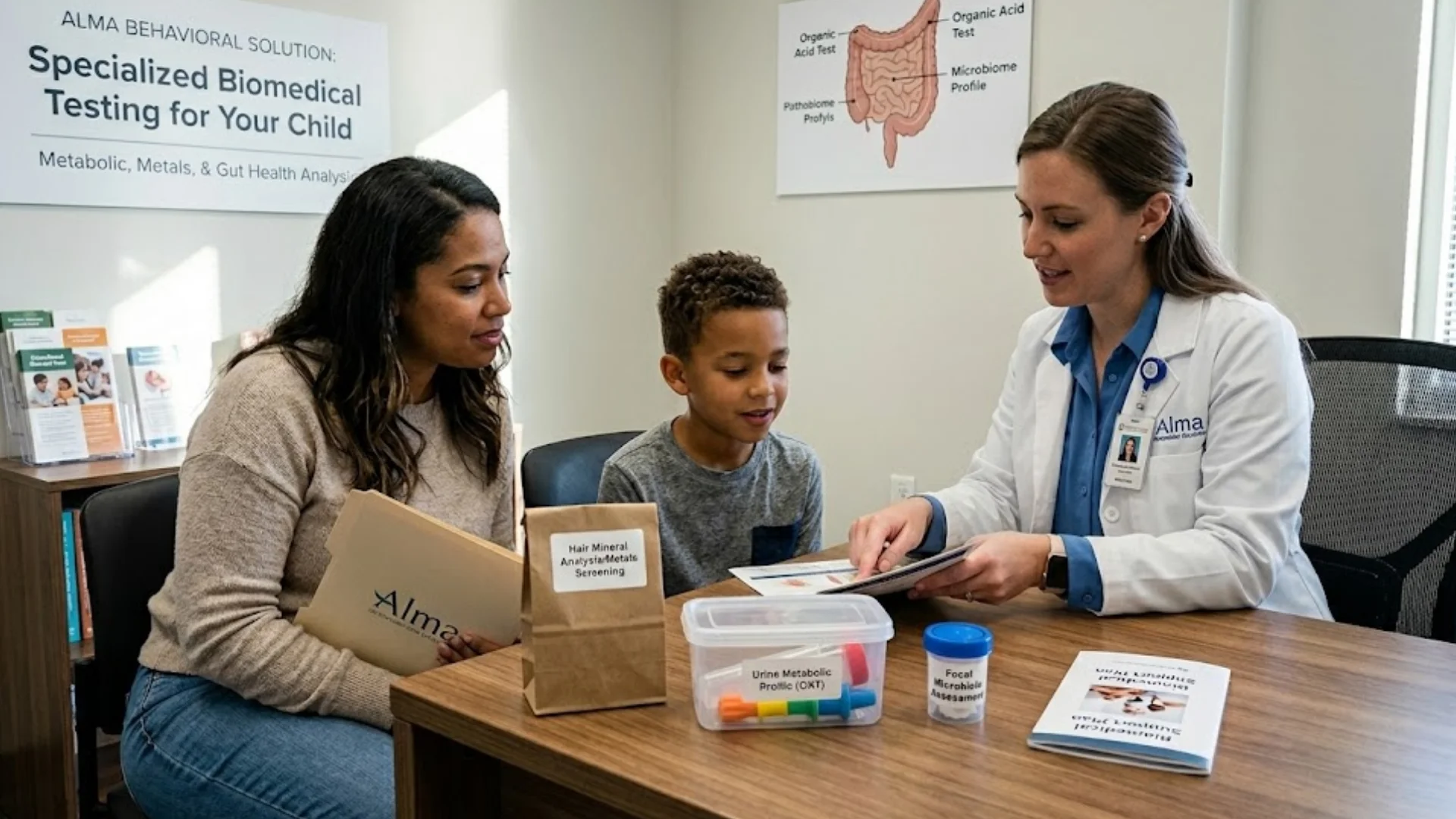
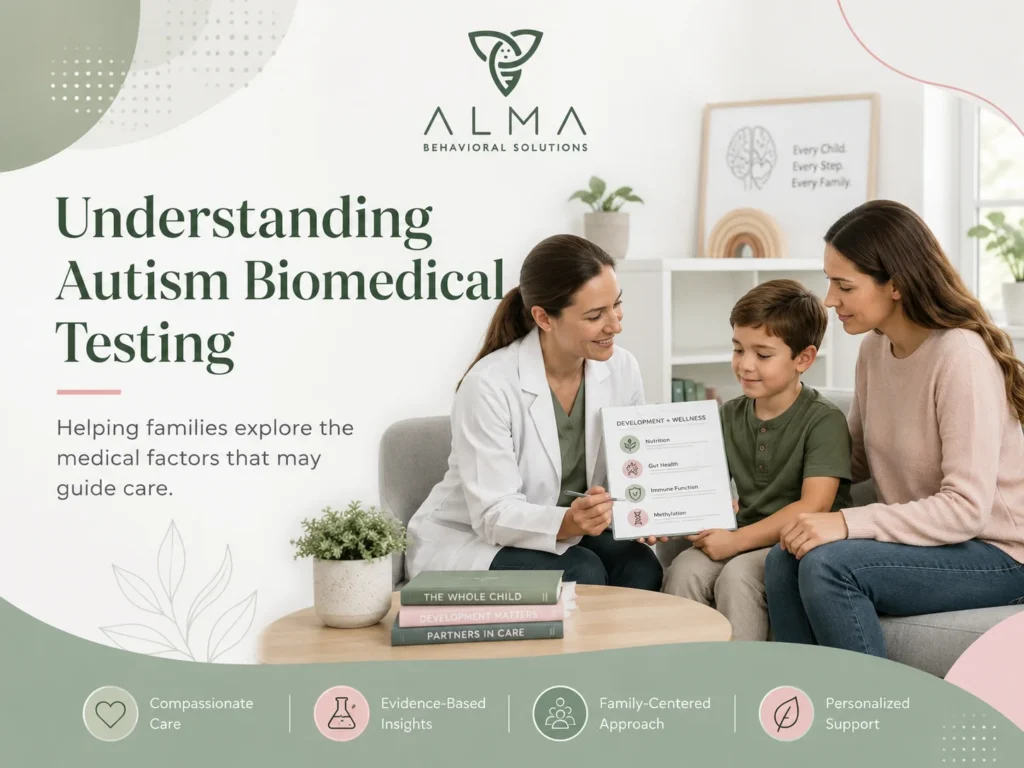
Autism biomedical testing involves medical testing examining biological factors that might impact a child’s development, behavior, learning, sleep, attention, comfort or treatment.
Biomedical testing does not replace autism diagnostic tests. Instead, it may be used after or alongside the autism diagnosis process to better understand a child’s health needs.
In simple terms, autism biomedical testing may help answer questions such as:
Would there be a genetic link to the child’s developmental profile?
Are seizures, sleep problems, or metabolic problems impacting learning?
Are gastrointestinal symptoms, nutrition, or medications affecting behaviour?
Do medical findings give any indication to help decide on treatment?
Alma Behavioral Solutions specialize in behavioral, developmental and family-centered care. Our team can support families to recognise if there are other medical issues that might need to be discussed with a healthcare professional.
Is There a Medical Test That Diagnoses Autism?
There is no blood test, brain scan or genetic test to diagnose autism. Autism diagnostic tests are based on behavior, development, communication, social interaction, restricted or repetitive behaviors, and clinical judgment.
The American Academy of Pediatrics guidelines for developmental surveillance and autism screening are to conduct them at 18 and 24 months of age, and to refer for a diagnostic evaluation if concerns are raised. Children should also be referred for intervention when developmental delays are identified, not waiting until a diagnosis of autism has been finalised before intervention starts.
There are screening tests for autism which can be organised in the form of questionnaires for parents, developmental checklists and observation tools. Developmental assessments for autism may look at language, play, social skills, behavior, learning, adaptive skills, and daily functioning.
Parents, caregivers, teachers, psychologists, pediatric specialists and therapists are all involved in pediatric autism testing. A thorough first evaluation of autism will give families information about the diagnosis and support plan.
Why Biomedical Testing May Be Considered
Biomedical testing might be considered if there are medical issues that can impact a child’s comfort, behavior, sleep, attention or ability to participate in therapy that are present in some children with autism.
A child who is not sleeping well may have more difficulty learning. There may be more difficult behavior observed if a child has a stomach ache. Changes in attention, movement or development may occur in a child who has seizures. If a child has some genetic results, they might require particular medical surveillance and medical treatment advice.
Autism biomedical testing may be helpful when a child has:
Developmental regression
Seizure-like episodes or staring spells
Ongoing sleep problems
Feeding concerns or restricted diet
Constipation, reflux, diarrhea, or abdominal pain
Unusual physical features or known family genetic history
Medication side effects or unusual medication response
Significant developmental delays beyond autism symptoms
Always seek advice from a health care professional before undergoing a medical test. Alma Behavioral Solutions can work with families and providers to ensure that behavioral care works for the child’s comprehensive support needs.
Types of Autism Tests Families May Hear About
Autism care often includes different kinds of testing. Some tests aid in diagnosis, and some that aid in planning treatment or medical care.

Autism Screening Tests
A screening test is typically a short instrument to determine if a child is exhibiting symptoms that would require a more extensive evaluation and is used to screen for signs of autism. Well-child visits can include pediatricians using screening tools. The CDC notes that all children should be screened for developmental delays during regular visits and specifically screened for autism at 18 and 24 months.
Screening does not confirm autism. It is useful in determining if a comprehensive evaluation is warranted.
Developmental Assessments for Autism
Autism developmental evaluations examine a child’s communication, play, learning, movement, behavior and normal activities. These assessments can be conducted through caregiver interviews, standardized assessments, direct observation and skill testing.
Alma Behavioral Solutions uses developmental and behavioral information to guide personalized autism care and ABA therapy goals in California US.
Genetic Testing
Medical providers might suggest genetic testing following an autism diagnosis if there are developmental delays, intellectual disability, family history, and unusual physical characteristics or seizures.
Common genetic tests may include chromosomal microarray or exome sequencing. The American College of Medical Genetics and Genomics has published guidance supporting exome or genome sequencing for some pediatric patients with congenital anomalies, developmental delay, or intellectual disability.
There is no single test to diagnose autism. It can assist to determine possible medical or developmental factors.
Metabolic & Nutrition-Related Testing
Metabolic testing evaluates the body’s use of nutrients and its production of energy. Blood or urine tests might be ordered if a child complains of feeling tired, has developmental problems, has feeding problems, isn’t growing properly, has unusual symptoms, or it is suspected that the child may have a difference in his or her metabolism.
Children with a very restricted diet, possible nutritional deficiencies or feeding difficulties may also be suggested for nutritional related testing. Major diet changes, elimination diets and supplements should not be instituted in the absence of medical advice.
Gastrointestinal Testing
A few autistic children suffer from constipation, reflux, diarrhea, bloating, belly pain or discomfort to feeding. Several aspects of behavior, sleep, attention, and therapy participation may be impacted by GI concerns.
If symptoms persist, a medical provider may order stool testing, imaging, laboratory tests or refer the provider to a gastroenterologist. If a child is not able to participate with comfort in learning and daily routines then treating the discomfort may, at least, allow them to participate with comfort.
EEG Testing
An electroencephalogram, or EEG, records electrical activity in the brain. A child may need an EEG if they have seizures, staring spells, regression, unusual movements, night-time events or if there is something neurological that is of concern.
EEG is not an autism diagnostic test. It is a medical test used to help evaluate seizure activity or brain electrical patterns when clinically appropriate.
MRI Testing
MRI forms a detailed picture of the structure of the brain. MRI is indicated when there are particular neurological concerns, unusual exam findings, regression, seizures, head growth concerns, or other neurological red flags.
The MRI is not a commonly used screening tool for autism. It may be used to answer specific medical questions.
Pharmacogenomic Testing
Pharmacogenomic testing evaluates the genes that could influence individuals’ reaction to specific drugs. It can be used if the child has side effects, limited response to medications or complex medication requirements.
All decisions about medicines should be made by a licensed health care professional who has a complete health record of the child.
How Alma Behavioral Solutions Supports the Testing Journey
Alma Behavioral Solutions is not a medical specialist, but can assist families to make developmental, behavioral, and practical information come together to form a clearer care plan.
Our autism care approach may include:
Reviewing developmental and behavioral concerns
Supporting autism evaluations for children
Creating ABA therapy goals based on real-life needs
Assisting families to observe and document behaviour, routine, sleep, communication and triggers.
Collaborating with medical providers when appropriate
Guiding families toward child-centered autism therapy services
Biomedical testing for autism can be helpful in obtaining medical data, and developmental supports and ABA therapy can aid in acquiring practical skills. As a whole, these pieces can assist in a more comprehensive care strategy.
When Should Parents Ask About Testing?
When concerns are impacting daily functioning, development, or comfort, parents may wish to consult a pediatrician or specialist about having their child tested for autism or evaluated for biomedical reasons.
If your child has lost skills, has possible seizures, is having trouble sleeping, has persistent GI symptoms, is highly sensitive to medications, is eating very little or has developmental questions that require further discussion, a conversation is helpful.
Early evaluation of autism becomes important since support can start at the time of concern. Don’t wait until the whole situation is clear before beginning an intervention that is beneficial to the family.
Final Thoughts
Autism biomedical testing is a component of a larger care plan. It can help families and health care providers to become familiar with genetic, neurological, metabolic, gastrointestinal, sleep or medication related issues that may impact a child’s development and well being.
Alma Behavioral Solutions feels that autism treatment needs to be considered, individualized and life-oriented. We help families move forward with confidence through autism evaluations for children, developmental testing for autism, the planning of ABA therapy, and family-centered Autism Behavioral Support.
To learn more about autism therapy services and support options for your child, contact Alma Behavioral Solutions today.
FAQs about Autism Biomedical Testing
1. Can biomedical testing change my child’s autism treatment plan?
Yes, biomedical testing can inform medical professionals of health issues that might impact your child’s development, comfort, sleep, behavior, or reaction to medications. For example, results may guide referrals, nutrition support, seizure care, GI treatment, or medication choices. It is always best to be examined by a trained medical professional.
2. What should parents bring to an autism evaluation appointment?
Parents may have previous reports, school notes, therapy records, medical history, medication lists, videos of inappropriate behaviors, sleep logs, feeding information and pictures of communication or play skills. These facts will give the provider insight into what the child is facing not only at the time of the visit but in the real world.
3. Are autism screening tests accurate for toddlers?
While screening tests can be used to recognize early signs, they are not a diagnostic tool. Some toddlers might test positive but not be diagnosed with autism and some might require additional observation over time. A full developmental evaluation gives a clearer picture.
4. Should siblings of autistic children be screened?
Developing monitoring of siblings is beneficial to them, particularly if parents observe delays in speech, play, social interaction, behavior or sensory responses. Early screening can ensure families can receive support earlier, if needed. Parents may consult with their pediatrician about when to do this.
5. During medical testing, how can behavioral data be of help?
The patterns of behavior may not make themselves apparent during a brief appointment, but behavioral data can reveal them. Notes about sleep, food, bowel movements, meltdowns, staring spells, medication reactions, or transitions can help medical providers decide which concerns need closer review and which tests may be appropriate.