
A child’s voice is not only about words. It is how they ask for help, share joy, make friends, and feel understood.
Many families begin seeking Speech Therapy in Glendale when there is something that seems more difficult than it should be. A child may speak very little, have difficulty articulating some sounds, repeat words, feel frustrated when asking for help, or struggle with social communication.
Evidence indicates that speech and language abilities are critical to learning, behaviour and social interaction. The National Institute on Deafness and Other Communication Disorders states that language difficulties may be experienced in the areas of speaking, listening, reading, and writing.
At Alma Behavioral Solutions, we support children and families with personalized, child-centered care. We help families understand communication needs simply and take the next step with confidence.
What is Speech Therapy?
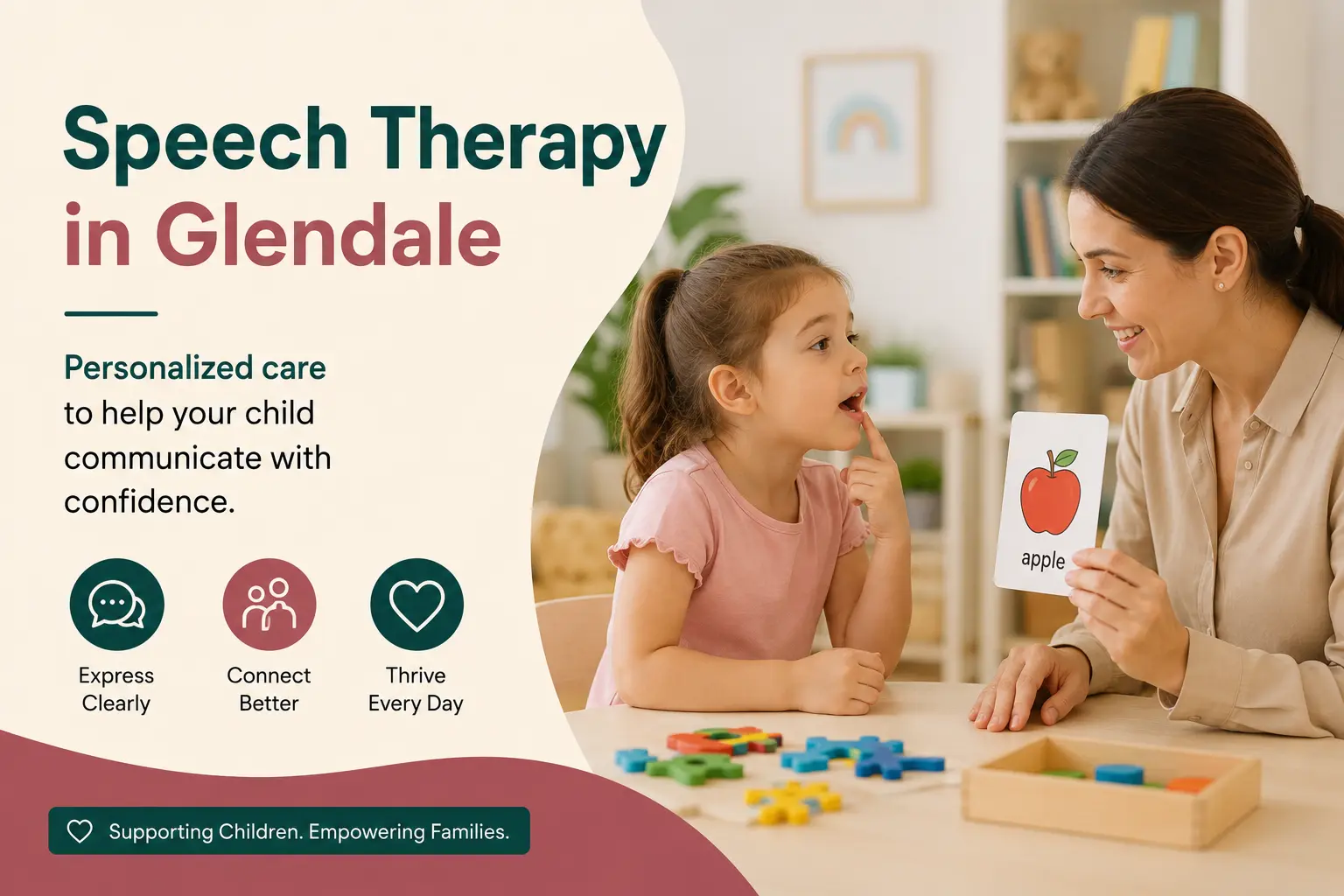
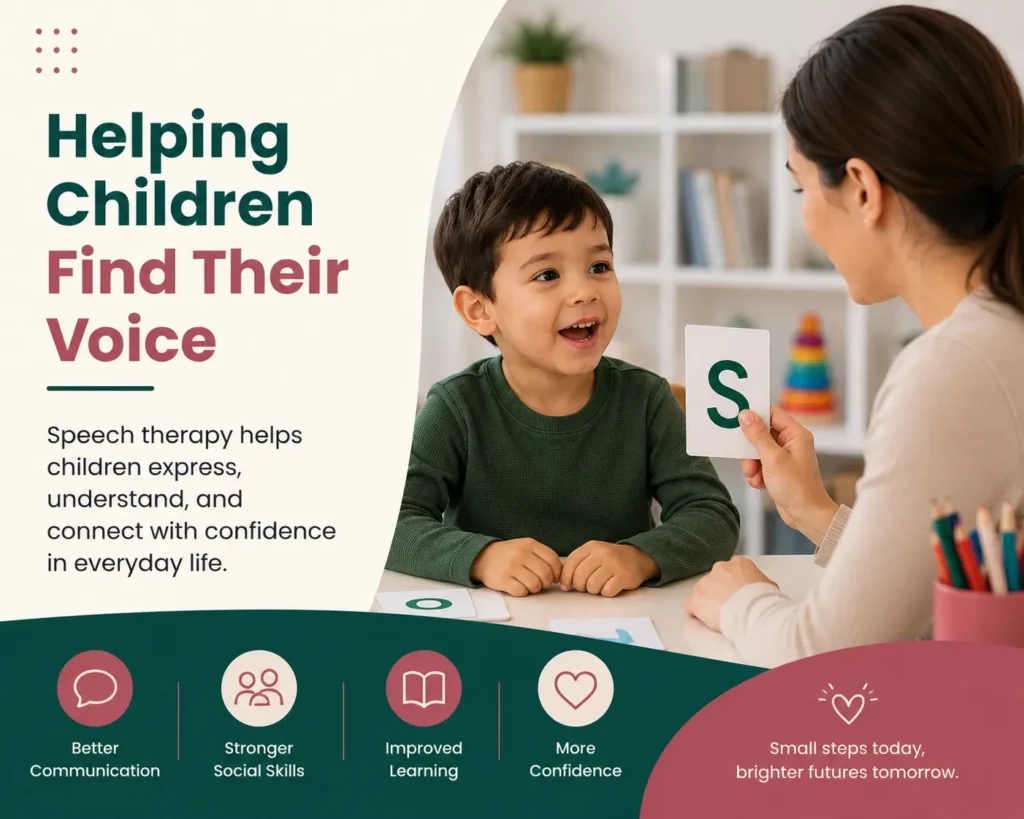
Speech therapy is a clinical service designed to teach children to produce sounds, understand language and express themselves in everyday situations. It focuses on communication skills including articulation, vocabulary development, listening and social interaction.
What is Pediatric Speech Therapy?
Pediatric Speech Therapy is tailored to the needs of children, focusing on developing age-appropriate communication skills. Structured activities and play-based techniques are commonly used in therapy to enhance learning in a natural way.
How a Speech Therapist works?
A Speech Therapist, or Speech-Language Pathologist, is a licensed professional who evaluates and treats speech and language problems. They develop individual plans to help every child in their communication development.
Speech Vs Language Differences Explained for Parents in Glendale
Speech and language are two aspects of communication.
- Speech: How a child produces sounds and words. For example, a child may say “tat” instead of “cat” or may have difficulty understanding.
- Language: How a child understands and uses words. This includes directions, naming objects, forming sentences, answering questions and sharing ideas.
A child may have speech, language or speech and language problems. A family’s knowledge of this distinction allows them to better identify the support that might be required.
Explore Our ABA Therapy for Autism Glendale CA:
Why Speech Therapy Matters for Daily Life
- Communication is a part of daily activities such as asking for help, playing, learning and relating to others.
- Difficulty communicating can lead to children feeling frustrated or misunderstood.
- Speech therapy helps develop skills to go through the day more comfortably and easily for the child and family.
How Speech Therapy Supports Different Needs
Speech therapy is flexible and customized to each child’s communication profile. Children may work on clarity of speech, understanding language, sentence structure or social communication.
Support can also involve gestures, visual supports, or AAC when appropriate. The aim is to help the child communicate effectively in a manner that is natural and meaningful.
Pediatric Speech Therapy in Glendale: Who Can Benefit?
Pediatric Speech Therapy helps kids with various communication difficulties. Individual children can exhibit difficulties in different ways, and therapy aims to enhance functioning communication in real life situations.
Children With Speech Delays or Late Talking
If a child has not started talking or only uses a few words, early support may be beneficial. Therapy is based on teaching basic communication skills incrementally.
- Limited words or no word combinations
- Relies on gestures, sounds, or frustration
- Needs support building early communication
Children Who Are Hard to Understand
Some children talk a lot, but it is hard for others to understand them. Therapy helps enhance clarity and confidence with speech.
- Speech sounds are unclear or missing
- Words may be difficult for others to understand
- Needs support with articulation and clarity
Children With Language or Understanding Difficulties
Language difficulties may impact comprehension and expression. Therapy helps children develop and utilize language more effectively.
- Difficulties in listening and understanding instructions or questions
- Limited vocabulary or sentence use
- Needs support with expressive and receptive language
Children With Autism or Social Communication Needs
Social situations may require support for language for children with autism or social communication differences. Therapy is about authentic interaction and connecting.
- Trouble in conversation, play or social interaction
- May use repetitive language or limited communication
- Needs support with functional communication and social skills
Speech Therapy Services in Glendale at Alma Behavioral Solutions
Alma Behavioral Solutions provides personalized Speech Therapy in Glendale for children with communication challenges. We teach communication skills in a real-life, structured and practical way.
Speech and Language Evaluations
Speech and language evaluation is a tool that helps determine a child’s range of strengths and areas of concern. This is important for having a successful therapy plan.
The evaluation may assess:
- Speech clarity and sound production
- Understanding of language
- Use of words and sentences
- Social communication and interaction
- Play skills and attention
- Functional communication in real situations
Parent input is also valuable in the assessment, which involves families’ observation of communication during daily routines.
Personalized Therapy Plans for Each Child
Children are offered a therapy plan that is tailored to their assessment and family needs.
Goals may focus on:
- Improving speech clarity
- Expanding vocabulary and sentence use
- Following directions and understanding language
- Developing social communication skills
- Using AAC or alternative communication methods
Therapy plans are reviewed and modified as the child progresses and as their needs change.
Play-Based and Child-Centered Therapy Sessions
Therapy sessions are tailored to ensure children remain engaged and work toward communication goals.
Sessions may include:
- Play-based activities
- Structured games
- Books and storytelling
- Turn-taking and interaction tasks
- Speech sound practice
The therapist demonstrates language, prompts students to talk, and supports students with practiced interaction in a positive environment.
Parent Guidance and Home Practice
Parent involvement is a key part of successful speech therapy. Families will be provided with strategies to facilitate communication during everyday activities, including:
- Modeling simple words and phrases
- Offering choices to encourage responses
- Creating opportunities for requesting and interaction
- Using repetition and consistency
- These strategies support therapy goals outside of sessions.
AAC and Functional Communication Support
AAC provides additional ways for children to express themselves when spoken language is limited or developing.
Support may include:
- Use of gestures, signs, or pictures
- Communication boards or visual supports
- Speech-generating devices when appropriate
- Teaching functional communication for daily needs
AAC is not a replacement for communication. It is a means to support it.
Types of Speech and Communication Skills Therapy May Support
Speech therapy targets key communication areas based on a child’s needs, including speech clarity, language use, understanding, social interaction, and alternative communication methods.
Articulation and Speech Sound Skills
Articulation therapy is aimed at enhancing the child’s ability to make speech sounds. Children can lose, change or mangle sounds, making speech hard to understand. Practice, feedback and repetition in therapy help increase accuracy of words and sentences.
Expressive Language Skills
Expressive language is the way a child expresses himself in words and sentences. Therapy may target vocabulary development, sentence formation, answering questions, and describing events. Early goals can include making requests and naming during play.
Receptive Language Skills
Receptive language is understanding spoken language. Kids might require assistance in following instructions, naming things or comprehending queries. Problems with this domain may impact learning and participation.
Social Communication Skills
Language in social communication is used appropriately in interactions. Skills include turn-taking, initiating conversation, responding to others, and maintaining topics. Specific support for children with autism or social communication difficulties can be helpful.
What to Expect During Pediatric Speech Therapy in Glendale
A pediatric speech therapy session utilizes the child’s individual goals and communication needs. Each session focuses on building communication skills that can be used in daily life.
Specific techniques are used to assist speech sounds, language development and social communication by the therapist. Activities are adjusted based on the child’s age and learning style.
Younger children may participate in therapy through play sessions and basic activities. With older children, sessions could include practice with articulation, language skills, and conversation.
Parent involvement is an important part of Pediatric Speech Therapy. Sessions can be observed and strategies provided to support communication at home.
Structured Activities Based on Communication Goals
Each session includes activities that match the child’s therapy goals. For instance, a child who is practising speech sounds could practise certain sounds in words. A child working on language may practice requesting or answering questions.
How Progress Is Measured and Supported
The progress of speech therapy is tracked by observing progress and using goal tracking. The strategies are modified based on the child’s progress. Consistent attendance and home practice support progress.
Benefits of Speech Therapy for Children and Families
Speech therapy helps the child and family to enhance communication in their everyday lives.
Communication Improvements
Communication improvements enable children to communicate their needs, wants and emotions more clearly and develop speech clarity, vocabulary and sentence use.
Daily Life and Learning Support
Daily life and learning support helps children follow instructions, answer questions and participate more comfortably in school and play.
Reduced Frustration
Reduced frustration gives children more ways to communicate, which can decrease meltdowns related to communication struggles.
Parent Involvement and Support
Parent involvement and support includes easy strategies to be used at home, suggestions for communicating in daily routines, and ways to support consistency at home and in therapy.
Social Confidence Growth
Social confidence growth supports children to be more comfortable with others, taking turns and engaging in social events.
Functional Communication Skills
Functional communication skills help children communicate in real-world situations, such as asking for assistance, making a decision or expressing an idea.
Choosing the Right Speech Therapist in Glendale
Selecting a speech therapist involves selecting the right professional to help your child develop his or her language skills by providing helpful guidance.
For families searching for Speech Therapy Glendale CA, it is important to work with a licensed Speech-Language Pathologist (SLP) who follows evidence-based practices.
Understand Your Child’s Communication Needs
Articulation delay, language disorders, stuttering or social communication disorders may require speech therapy. Early signs include limited vocabulary, unclear speech after age 3, difficulty following directions, or frustration when communicating.
Before choosing a provider, consider:
- What specific skills does my child struggle with?
- Does my child make age-appropriate progress?
- Does my child avoid speaking or interacting?
- Does my child have difficulty understanding instructions or questions?
- Does my child become frustrated when trying to communicate?
An assessment will be done by a qualified therapist to determine strengths and needs.
Choose a Therapist With Child-Focused Experience
Pediatric SLPs understand developmental milestones and use techniques such as modeling, repetition, and interactive activities. The type of therapy should be adapted to your child’s age and style of learning.
Work With a Therapist Who Communicates Clearly
A good therapist communicates goals, progress, and strategies in a very simple manner. The parent needs to be aware of the nature of therapy and skills to support skills in the home.
Understand the Therapy Methods Used
Therapy is individualized and can consist of:
- Articulation therapy for speech sounds
- Language intervention for vocabulary and sentence building
- Social communication training
- Fluency techniques for stuttering
- AAC systems for nonverbal communication
Look for Family Involvement in Therapy
Children make better progress when parents are involved. They will demonstrate simple strategies you can use at home, provide regular feedback and inform you of how you can help your child during the day.
Ensure Progress Is Measured and Shared
Goals, session notes and regular check-ins should be used to monitor progress. Understanding the skills that are improving and what the next steps are.
Prioritize Comfort and Therapist-Child Connection
Children will learn more effectively when they are safe and understood. A strong therapist-child connection helps keep your child engaged, motivated, and more confident in using communication skills.
Speech Therapy Glendale CA: Local Support for Families
Families in Glendale tend to seek speech therapy services that are easily accessible and consistent. Communication support may need parent involvement and ongoing sessions.
Why families search for Speech Therapy Glendale CA:
- Concerns about Speech Delay therapy or limited vocabulary
- Difficulty understanding a child’s words
- Autism-related communication needs
- School readiness and learning support
- Social communication challenges
Benefits of choosing local speech therapy support:
- Easier scheduling and consistent attendance
- Better coordination with schools and caregivers
- Stronger parent involvement in sessions
- More opportunities to practice skills in daily routines
Alma Behavioral Solutions strives to provide a family-oriented and child-friendly service. In our care, your child will develop communication skills and your parents will learn about it in the most clear and practical way.
Families in the surrounding area in Glendale and other communities in Los Angeles County could benefit from assistance that addresses the child and the family system.
Helpful Facts Parents Should Know About Speech and Language Development
Speech and language development varies across children, but understanding key facts helps parents recognize patterns, support communication growth, and make informed decisions about when to seek guidance or professional support.
- Speech and language is a process that takes place over a period of time beginning with gestures, sounds and early words, and later with phrases, sentences and conversations.
- Developmental milestones are not diagnoses and children cannot be considered delayed if they do not reach the milestones that have been presented.
- Language skills aid in learning beyond speaking, such as listening, reading, writing and comprehending instructions.
- Communication difficulties may impact social interaction, behaviour or involvement in school or everyday activities.
- Communication patterns can be affected by autism and children may communicate through speech, AAC, gestures or other means.
- Early support is provided to families to help them understand their child’s communication needs and to offer practical support to encourage language learning in daily activities.
- Parent involvement is important for reinforcing communication skills throughout the therapy process.
- The key to clear and effective communication is more important than correct speech in early stages of development.
- When there is a concern, professional evaluation can help identify strengths and areas of need.
- Consistent support and practice can improve communication skills over time in a meaningful way.
Getting Started With Speech Therapy at Alma Behavioral Solutions
Beginning speech therapy can feel overwhelming, but clear steps help families move forward with confidence and understanding while supporting their child’s communication growth in a structured, supportive way.
Step 1: Share Your Concerns
Parents share observations at their home, school or play. This can involve restricted words, unclear speech, having trouble understanding instructions or frustration when talking.
Step 2: Provide Background Information
Shared developmental history, school feedback, previous evaluations and daily routines. This will help the therapist to gain information about an overview of the child’s communication profile.
Step 3: Initial Evaluation
A speech-language evaluation is completed to assess speech clarity, language skills, understanding, and social communication. This is a step to identify strengths and areas for support.
Step 4: Personalized Therapy Plan
A customized plan is developed based on the results. Goals can be related to speech sounds, language development, social communication or AAC support.
Step 5: Begin Therapy Sessions
Sessions are child-centred, structured and planned. Activities can be play, conversation or guided practice, which will help to develop communication skills in a natural way.
Step 6: Parent Guidance and Support
Parents receive simple strategies to use at home. This aids skills to be reinforced throughout the day when eating, playing and reading.
Step 7: Ongoing Progress and Adjustments
Goals for therapy are continually evaluated. Adjustments made according to progress so support remains in line with the child’s needs.
Step 8: Consistency and Teamwork
People get better with repeated sessions, at-home work and collaboration between the therapist and family.
Contact Alma Behavioral Solutions for Speech Therapy in Glendale
When your child struggles with speech clarity, language development, social communication or expressing needs, Alma Behavioral Solutions can tell you the next step.
Families looking for Speech Therapy in Glendale, Speech Therapy Glendale CA, Pediatric Speech Therapy, or a Speech Therapist in Glendale can contact our team to learn more about personalized care for children and families.
We aim to support in a warm, clear and practical manner. We support families to make sense of communication needs and investigate care that is suited to the child.
To ask questions, discuss your child’s needs, or schedule the next step, call Alma Behavioral Solutions at (747) 250-8494 or email info@almabehavioralsolutions.com.
FAQs About Speech Therapy in Glendale
How do I know if my child needs speech therapy?
If your child has difficulty speaking clearly, understanding language, following directions, or expressing their thoughts, a speech-language evaluation can help determine whether therapy is recommended.
What age should a child start speech therapy?
Children can begin speech therapy as soon as communication concerns are identified. Early evaluation and intervention can help to promote language development at key developmental periods.
How long does speech therapy usually take?
The length of therapy depends on your child’s communication needs, goals, and progress. A few kids need short-term assistance and others, longer-term therapy.
Do parents participate in speech therapy?
Yes. Parent involvement is an important part of pediatric speech therapy. Therapists offer feedback, update them on progress, discuss their objectives, and offer ideas for home use that help to foster communication.
What happens during the first speech therapy evaluation?
Your child’s speech, language and communication skills and developmental history are assessed by a licensed Speech-Language Pathologist. The outcomes will help to decide whether or not therapy is required and will help to inform a unique treatment plan.