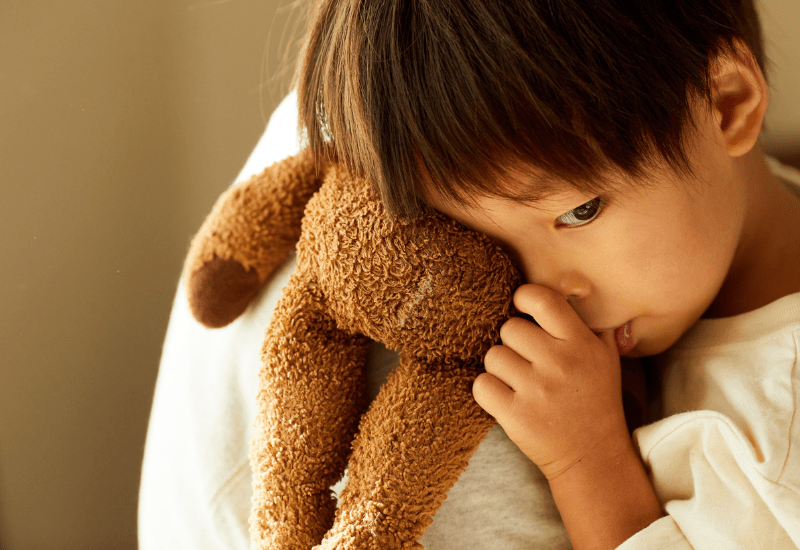
Imagine a young child who seems constantly on alert — scanning the room, clinging to routines, melting down when plans shift even slightly. Or a child who wants to participate but becomes overwhelmed by noise, transitions, or unclear expectations.
Parents often ask, “Is this autism? Is it anxiety? Is it ADHD? Or is it all of them together?”
The truth is, autism and anxiety frequently overlap in early childhood, and ADHD symptoms can blend into the picture too. These conditions don’t exist in neatly separate boxes — they interact, amplify one another, and shape how a child experiences the world.
At Alma Behavioral, we approach autism and anxiety through a lens of compassion, regulation, and nervous system support. When we understand why certain behaviors appear, we can better guide children toward calm, connection, and confidence.
What is the biggest red flag for autism?
There isn’t one single biggest red flag, but the most consistent early indicator of autism is a difficulty with social communication — especially reduced joint attention.
Joint attention involves sharing experiences with another person, like pointing to an object to show interest, looking back and forth between a toy and a caregiver, or seeking shared enjoyment.
Other early red flags include:
- Limited eye contact
- Delayed or unusual language patterns
- Limited imitation of gestures or sounds
- Repetitive behaviors or restricted interests
- Sensory sensitivities
- Difficulty adapting to change
- Limited pretend play
Understanding these signs matters because autism and anxiety often emerge together. A child who struggles to understand social cues may also experience worry, fear, or overwhelm in groups, transitions, or unpredictable environments.
Early signs don’t mean something is “wrong” — they mean a child’s nervous system communicates differently. With the right support, children can build strong social, communication, and emotional skills that help them thrive.
What triggers anxiety in autism?
Anxiety is extremely common in autistic children — in fact, research shows that up to 40–60% of autistic kids experience significant anxiety symptoms. Autism and anxiety interact in ways that make certain environments or situations especially challenging.
Common anxiety triggers in autism include:
1. Sensory Overload
Bright lights, loud noises, crowded spaces, or unpredictable sound patterns.
2. Social Uncertainty
Not knowing what others expect, difficulty reading cues, or fear of making mistakes.
3. Transitions & Change
Moving between activities, shifting routines, or entering unfamiliar environments.
4. Perfectionism or Literal Thinking
Many autistic children want to “get things right” and feel anxious when rules or expectations are unclear.
5. Communication Challenges
When a child knows what they want to say but can’t express it, anxiety builds quickly.
Autism and anxiety form a feedback loop: sensory challenges or misunderstandings create stress, and the stress then heightens the child’s sensitivity to the next challenge.
At Alma Behavioral, we teach children emotional regulation tools and help families modify environments to reduce unnecessary anxiety triggers.
Do autistic people struggle more with anxiety?
Yes. Autistic people are significantly more likely to experience anxiety than their non-autistic peers. Autism and anxiety overlap because autistic children often navigate a world that isn’t designed for their sensory, communication, or processing needs.
Children with autism and anxiety may show:
- Increased clinginess or avoidance
- Stomachaches or somatic complaints
- Irritability or meltdowns when overwhelmed
- Worries about routines, rules, or mistakes
- Difficulty calming their bodies
- Heightened fear responses in new environments
The overlap between autism and anxiety is not a sign of weakness — it’s a sign of a nervous system trying to cope with unpredictability. When we support children with predictable routines, sensory accommodations, and emotional tools, anxiety decreases and confidence grows.
Is anxiety a symptom of high-functioning autism?
Anxiety is not a core symptom of autism, but it is extremely common in children with high-functioning autism. Because these children often appear verbally strong or academically advanced, their deeper emotional struggles may go unnoticed. This means their autism and anxiety may express themselves through:
- Masking or trying to “act typical” to fit in
- Perfectionism or fear of failure
- Shutdowns or meltdowns after holding it together all day
- Overthinking, rumination, or rigid routines
- Difficulty navigating friendships despite strong vocabulary
For many children with high-functioning traits, anxiety becomes the outward signal that something in their environment feels confusing, overwhelming, or too unpredictable.
At Alma Behavioral, supporting autism and anxiety together is essential. When both are addressed — sensory needs, communication support, emotional regulation, structure — children feel safer, more understood, and more able to express who they truly are.
Bringing It All Together
Autism and anxiety often develop side by side, especially in early childhood. Understanding their connection helps caregivers and professionals respond with compassion rather than confusion. When we look beneath behaviors — the overwhelm, avoidance, meltdowns, or perfectionism — we often find a nervous system asking for support.
At Alma Behavioral, we help families navigate autism and anxiety with evidence-based strategies, sensory-informed care, and a deep belief in each child’s potential. Children don’t need to change who they are — they need tools, understanding, and a world that meets them halfway.
Because when families understand the interaction between autism and anxiety, they can finally recognize what their child is trying to tell them — and that’s when growth begins.